Why Your Tomato Tastes Like Nothing (And How Organic Growing Actually Fixes That)
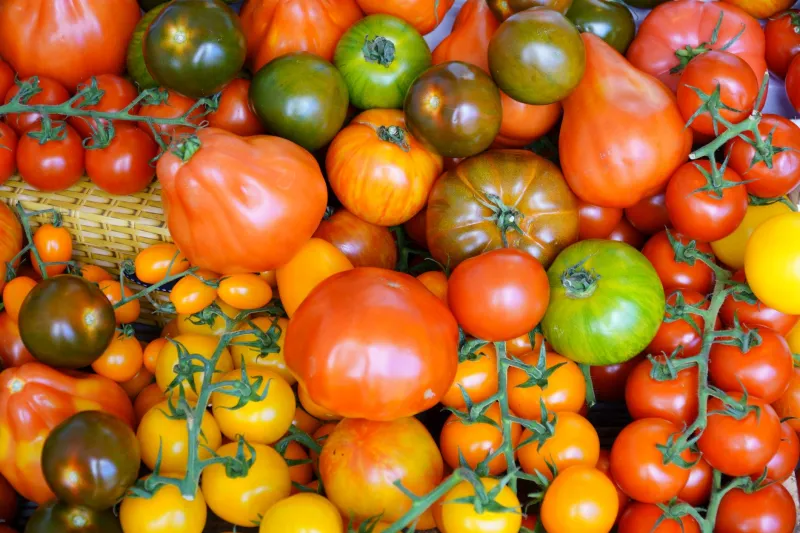
Let's be honest. At some point, you've stood over your kitchen counter, taken a bite of a perfectly round, perfectly red grocery store tomato, and felt absolutely nothing. No burst. No sweetness. No that thing a tomato is supposed to do. It looked like a tomato. It just didn't taste like one.
You're not imagining it. And the explanation goes a lot deeper than "it was picked too early" or "it traveled too far." The real story starts in the soil, runs through the plant's own biology, and ends in a measurable chemical difference between how organic and conventional produce develops flavor. Here at Kelly Tee Garden Organics, we talk a lot about food that's grown with love — but love, it turns out, has a molecular fingerprint.
Plants Under Pressure: The Stress Response Nobody's Talking About
Here's something that might surprise you: plants make flavor compounds largely as a form of self-defense.
When a plant faces mild environmental stress — competition from weeds, the occasional nibble from an insect, variable soil conditions — it responds by producing secondary metabolites. These are chemical compounds like polyphenols, flavonoids, anthocyanins, and terpenes. They help the plant ward off pests, attract pollinators, and cope with its environment. They also happen to be the exact compounds responsible for the rich, complex, layered flavors we associate with really good food.
Conventional agriculture, with its heavy reliance on synthetic pesticides and herbicides, essentially removes most of that stress. The plant never has to work very hard. It grows fast, it grows big, and it produces a lot of water weight and simple sugars. But the deeper flavor architecture — the stuff that makes an heirloom strawberry taste like it's telling you a story — doesn't fully develop.
Organic farming, by contrast, asks more of the plant. Without synthetic chemical shields, the plant has to do more of its own biochemical work. And that work shows up in the flavor.
What the Research Actually Shows
This isn't just farmer folklore. A landmark meta-analysis published in the British Journal of Nutrition reviewed data from 343 peer-reviewed studies and found that organic crops contained significantly higher concentrations of antioxidants — including polyphenols — than their conventionally grown counterparts. We're talking differences of 19 to 69 percent depending on the compound and the crop.
Researchers at Washington State University have also studied how organic soil management affects the volatile compounds in produce — the aromatic molecules that your nose detects before your tongue even gets involved. Their findings suggest that organic growing conditions consistently support more diverse and concentrated volatile profiles, which translates directly to more complex, fuller aroma and taste.
Dr. Alyson Mitchell, a food scientist at UC Davis who has spent years studying the chemistry of organic versus conventional produce, has pointed to polyphenol concentration as a key driver. "When plants are grown in conditions that require them to fend for themselves a bit more," she's explained in interviews, "they invest more in these protective compounds. And those same compounds are what we perceive as flavor intensity."
That's not marketing. That's plant biology.
The Crops Where the Difference Is Most Dramatic
Not every organic vegetable is going to blow your mind compared to its conventional version. For some crops, the gap is subtle. For others, it's the difference between an ingredient and an experience. Here's a rough framework for where to prioritize your organic dollars if flavor is the goal:
High-Impact Organic Swaps (Taste Difference Is Significant):
- Tomatoes — Sugar-to-acid balance and volatile aroma compounds are dramatically affected by growing conditions. Organic heirlooms, especially from local farms, are almost incomparably better.
- Strawberries — Conventionally grown berries are bred for shelf life and size. Organic strawberries, especially smaller varieties, develop far more intense sweetness and fragrance.
- Herbs (basil, cilantro, mint) — The essential oils that give herbs their punch are secondary metabolites. Organic herbs are noticeably more aromatic and flavorful.
- Leafy greens (arugula, spinach, kale) — Bitterness, earthiness, and the peppery bite of good arugula are all polyphenol-driven. Organic versions retain these characteristics better.
- Bell peppers — The sweetness-to-bitterness ratio in organic peppers tends to be more complex and satisfying.
Moderate Impact:
- Apples, peaches, cucumbers, and carrots all show meaningful differences, but the gap is somewhat narrower depending on variety and storage.
Lower Priority for Flavor:
- Onions, avocados, and thick-skinned produce where the internal chemistry is somewhat buffered from growing conditions.
What Farmers Have Been Saying All Along
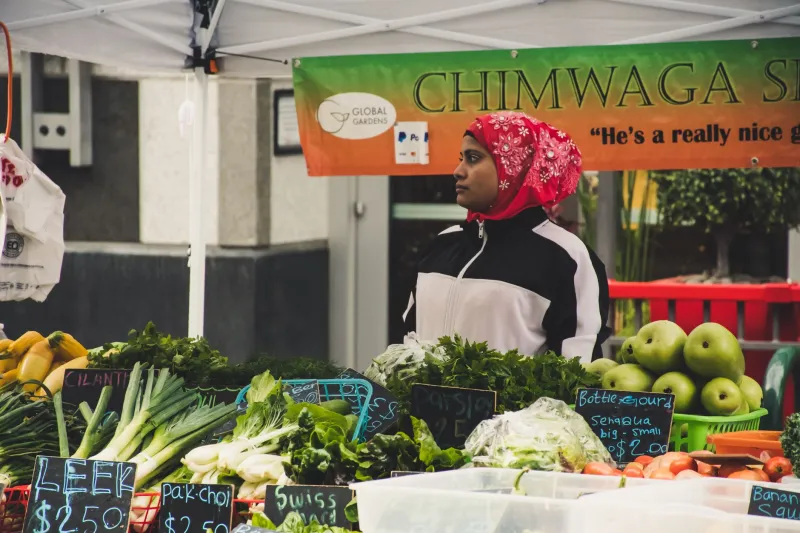
Talk to any small-scale organic farmer at your local market and they'll tell you this without hesitation. They've known it for decades — not because they read the studies, but because they taste their own food.
Farmers who grow using regenerative and organic methods consistently report that their produce looks different, stores differently, and tastes different. The tomatoes are smaller. The carrots are knobby. The strawberries don't last as long in the fridge. But the flavor? Nobody argues about the flavor.
At farms like ours, we let the soil do the heavy lifting. Healthy, living soil rich in microbial activity creates a nutrient environment that supports exactly the kind of complex plant development that produces real flavor. Synthetic fertilizers push nitrogen hard, which drives water uptake and fast growth — great for yield numbers, not so great for taste.
How to Train Your Palate to Notice the Difference
If you want to actually feel this difference rather than just read about it, here's a simple approach: buy the same type of produce from two sources in the same week. A conventional grocery store tomato and a local organic tomato. Eat them side by side, same day, same preparation. No dressing, no salt — just the raw ingredient.
Pay attention to three things: the initial aroma when you cut into it, the first burst of juice on your tongue, and the finish — what lingers after you swallow. Flavor scientists call this the "retronasal" experience, and it's where the polyphenol complexity really shows up.
Once you've done that comparison with tomatoes, try it with strawberries. Then herbs. You'll stop needing the science to convince you.
The Bottom Line
The idea that organic food tastes better has been dismissed for years as the wishful thinking of people willing to pay more for a lifestyle label. But the science doesn't support that dismissal anymore. The flavor difference is real, it's measurable, and it comes directly from the way organic farming works with plant biology rather than around it.
When we say our food is grown with love, we mean it — but we also mean it's grown with intention, with patience, and with respect for what the plant actually needs to become something worth eating. That's not a slogan. You can taste it.