Two Peaches, One Label: What the Organic Sticker Doesn't Tell You About Flavor
Picture this: you're at the farmers market on a Saturday morning, still holding your coffee, and you bite into a peach from a small Georgia farm. Juice runs down your wrist. The sweetness is almost embarrassing. Later that week, you grab a bag of certified organic peaches from a big-box grocery store. Same label. Totally different experience — mealy, pale, vaguely peachy at best.
So what gives? If both carry the USDA Organic seal, why does one taste like the actual fruit and the other taste like a memory of one?
The answer isn't a simple gotcha about corporate greed or fake labels. It's more interesting than that — and it starts in the dirt.
The Organic Certification Doesn't Grade Flavor (Or Nutrition)
Here's something the label doesn't advertise: USDA Organic certification is a process standard, not a quality standard. It tells you what inputs a farmer didn't use — synthetic pesticides, GMO seeds, artificial fertilizers. It says nothing about how far the fruit traveled, how long ago it was harvested, or how biologically alive the soil was when that peach tree put down its roots.
A 10,000-acre certified organic operation in California can legally sell fruit under the same sticker as a 3-acre family farm in South Carolina. Both followed the rules. Only one of them probably grew your peach in soil that was teeming with microbial life, picked it the day before market, and drove it two hours to your city.
That gap — between the rule-following and the actual farming — is where flavor lives or dies.
What Happens Between the Tree and Your Teeth
Flavor in fruit isn't fixed. It's dynamic. A peach develops its sugar content, its volatile aromatic compounds (the stuff your nose detects as peach-ness), and its texture in the final days before peak ripeness. Industrial organic operations harvest early — sometimes a week or more before peak — because the fruit needs to survive a long cold-chain journey: from orchard to packing house, packing house to distribution center, distribution center to regional warehouse, warehouse to store, store shelf to your cart.
At each step, enzymatic changes continue. Starches convert. Cell walls break down. Aromatics fade. By the time you bite in, that peach has been alive and aging for 7 to 14 days, often in controlled-atmosphere storage that slows respiration but doesn't stop the clock.
Your farmers market peach? It was probably on the tree four days ago. Maybe two. The farmer picked it closer to ripe because they could — the drive to market is short, the turnover is fast, and there's no cold-chain logistics to engineer around.
That's not a marketing story. That's food science.
The Soil Underneath It All
Now zoom out even further. Before the fruit ever formed, before the blossom opened, the flavor potential of that peach was being written underground.
Soil microbiome diversity — the richness of bacteria, fungi, and other organisms living in healthy, well-managed earth — directly influences how a plant absorbs minerals and synthesizes the compounds that become flavor. Mycorrhizal fungi, for example, extend a plant's root system dramatically, pulling in phosphorus and micronutrients that wouldn't otherwise be bioavailable. Those nutrients feed metabolic pathways that produce the sugars and acids and aromatic compounds that make a peach taste like something.
Small regional farms, especially those farming regeneratively or biodynamically (often beyond just organic certification), tend to have richer, more diverse soil ecosystems. They're not working at a scale that requires heavy tillage or soil-depleting monocultures. They're composting, rotating crops, maybe integrating livestock. The soil is alive in a way that a large certified-organic monoculture, even a well-run one, often isn't.
Janie Hollis, who runs a 12-acre certified organic and biodynamic stone fruit operation in western North Carolina, put it plainly when we asked her about this: "People ask me why my peaches taste different and I tell them — I've been feeding this soil for 11 years. The flavor isn't in my fruit. It's in what's underneath it."
The Side-by-Side Reality
We did our own informal taste test here at Kelly Tee — nothing lab-grade, but honest. We sourced organic peaches from three places: a local farmers market vendor (picked two days prior), a regional co-op that sources from farms within 150 miles, and a national grocery chain carrying a major organic brand.
The results weren't subtle.
The farmers market peach had the deepest color, the most pronounced aroma, and a sugar-acid balance that actually made you close your eyes. The co-op peach was solid — noticeably ripe, good flavor, a little less complex. The grocery store organic? Firmer than it should've been for its color, with a thin sweetness and almost no aromatic punch.
None of these are bad peaches. But only one of them delivered what a peach is actually capable of.
Proximity Is an Ingredient
This is the part of the organic conversation that doesn't fit neatly on a label. Distance from farm to table isn't just a logistical detail — it's a flavor variable. It's a nutritional variable. Vitamin C degrades after harvest. Polyphenols shift. Antioxidant activity measurably declines the longer produce sits.
When you buy from a local farmer — even one who isn't certified organic but farms with care — you're often getting more nutritional density than you would from a certified organic product that's been in transit for two weeks. That's a complicated truth for a label-dependent food system to sit with.
This doesn't mean certification is meaningless. It's still one of the better tools we have for holding large operations accountable to baseline standards. But it's a floor, not a ceiling.
How to Shop Smarter This Summer
You don't need a PhD in soil science to eat better. A few practical moves:
- Ask your farmers market vendor when they picked. The answer will tell you a lot.
- Look for farms that mention soil health, composting, or regenerative practices — these signal growers who think beyond the certification checklist.
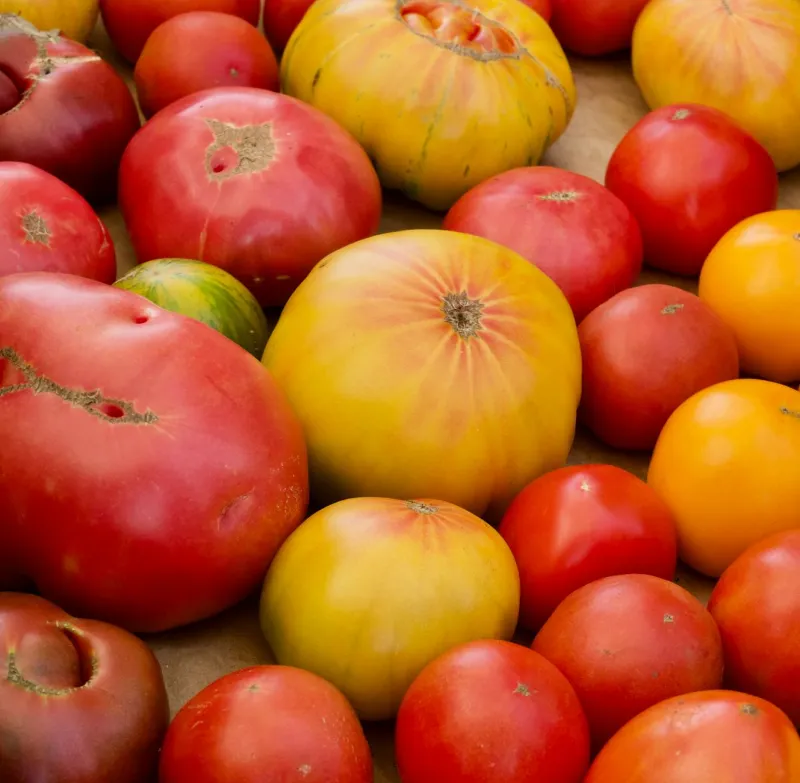
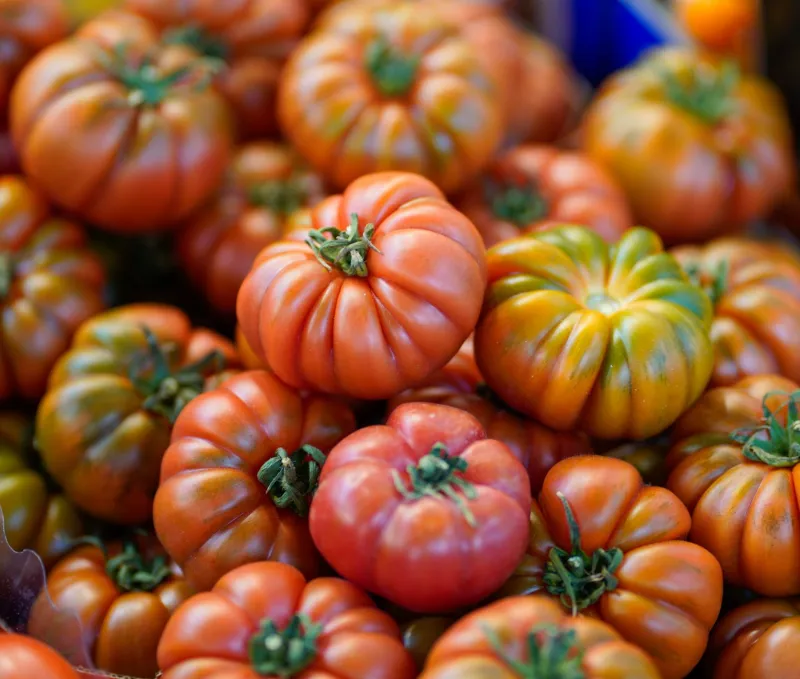
- Buy ugly. Irregular shapes and uneven color often mean a fruit was grown for flavor and allowed to ripen naturally, not engineered for shelf appeal.
- Smell before you buy. A ripe, well-grown peach announces itself. If you have to wonder whether it smells like a peach, it probably won't taste like one either.
- Support regional co-ops and buying clubs that prioritize sourcing from within a defined radius. Proximity-conscious sourcing is doing real work even when it doesn't make it onto the label.
The Label Is a Starting Point
We believe in organic farming here — deeply, and for a lot of reasons that go beyond personal health. It's better for farmworkers, better for waterways, better for the soil organisms that make agriculture possible in the first place. The certification matters.
But the certification is the beginning of the story, not the whole thing. The peach that tastes like a peach — the one that makes you stop mid-conversation because you didn't expect fruit to feel like that — came from somewhere specific. It came from a farmer who knows their land, who picked it at the right moment, who drove it to you before the magic faded.
That's what we mean when we say grown with love. The label can't capture it. Your taste buds absolutely can.