Tasting the Past: How Organic Farmers Are Digging Up Flavors Industrial Agriculture Buried
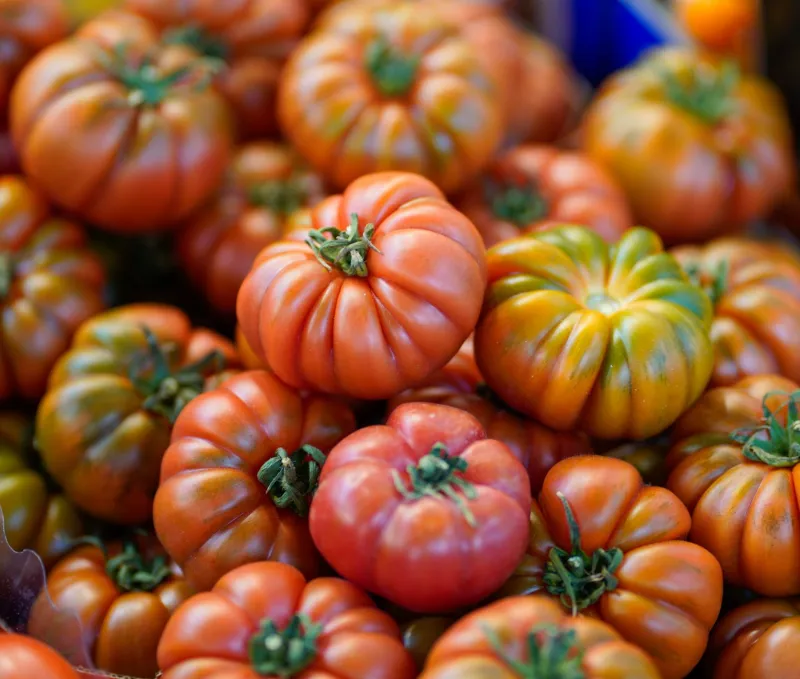
There's a moment that happens to a lot of people the first time they bite into a genuinely good tomato — one grown slowly, in real soil, from a seed that's been passed down through generations. It stops them. Not because it's pleasant. Because it's unfamiliar. Because somewhere in the back of their brain, a small alarm goes off that says: wait, this isn't what tomatoes taste like.
Except it is. Or rather, it's what they used to taste like, before American agriculture decided flavor was optional.
Over the past six decades, industrial farming systematically bred the complexity out of our food. Not out of malice — out of math. Varieties were selected for yield, shelf life, uniform size, and the ability to survive a cross-country truck ride without bruising. Taste wasn't part of the equation. The result is a produce aisle full of food that looks perfect and says almost nothing.
But something is shifting. Across the country, organic and heirloom-focused farmers are doing what you might call culinary archaeology — digging through seed banks, old agricultural journals, and the memories of grandmothers to resurrect the flavors that got quietly buried.
What We Actually Lost
The numbers are more sobering than most people realize. According to research from the Rural Advancement Foundation International, the United States lost roughly 93% of its seed varieties between 1903 and 1983. That's not a rounding error. That's a wipeout.
Gone were things like the Mortgage Lifter tomato's jammy depth, the peppery bite of certain heirloom radishes, the almost wine-like sweetness of an Arkansas Black apple in late fall. These weren't just flavors — they were regional identities. A tomato grown in South Carolina tasted different from one grown in Oregon, because the soil was different, the seed was different, the whole relationship between plant and place was different.
Industrial agriculture flattened all of that. It needed consistency at scale. You can't run a national grocery chain on regional variation.
The organic movement, almost by accident, became the keeper of what remained.
The Farmers Doing the Work
Talk to small organic growers long enough and you start to hear the same kind of language — words like rescue, recover, remember. These aren't people who are farming nostalgically. They're farming with intention.
Many work directly with seed libraries and preservation organizations to source varieties that haven't seen commercial production in decades. They'll trial eight different types of winter squash to find the one with the most complex flavor, then spend three seasons figuring out exactly how to grow it in their specific soil and climate. It's slow. It's expensive. And it produces food that tastes like it has a story.
The soil itself plays a starring role here. Organic growing methods — cover cropping, composting, avoiding synthetic inputs — build microbial communities in the ground that directly influence how a plant develops its flavor compounds. Stress, in the right amounts, makes plants produce more of the phytochemicals that translate to taste. A tomato that had to work a little harder for its water is almost always more flavorful than one that was fed and irrigated on a precise industrial schedule.
This is why the same heirloom variety grown organically and conventionally can taste dramatically different. The seed matters. But so does everything around it.
What Taste Scientists Are Finding
Flavor researchers have been paying attention to this for a while now. The compounds responsible for what we perceive as complex, interesting taste — volatile aromatics, polyphenols, certain sugars and acids — tend to be higher in organically grown and heirloom produce than in their conventional counterparts.
Some of this is genetic. Heirloom varieties simply weren't bred to sacrifice flavor for uniformity, so they retained the genetic diversity that produces interesting chemistry. Some of it is environmental. Organic soil biology creates conditions where plants synthesize a broader range of flavor precursors.
What's particularly fascinating is that many of these flavor compounds overlap with the nutrients that make food genuinely good for you. The same polyphenols that give an heirloom strawberry its intense, almost floral complexity are also the ones associated with antioxidant activity in the body. Flavor, in this context, isn't separate from nutrition — it's a signal of it. When food tastes more alive, it often is more alive, biologically speaking.
The Home Cook's Awakening
Ask anyone who's started buying from a local organic farm or farmers market and you'll hear a version of the same story. Something shifts. Recipes that used to require heavy seasoning suddenly don't. A simple roasted vegetable becomes interesting on its own. Salads stop being obligation and start being something you actually want to eat.
This isn't placebo. It's what food tastes like when it hasn't been engineered to be inoffensive.
There's also something quietly emotional about it. People describe tasting a particular heirloom apple or a dry-farmed tomato and feeling a connection to something they can't quite name — a flavor memory that doesn't belong to them personally but feels ancestral somehow. Like tasting a sentence from a book you've never read but somehow recognize.
That's not an accident. These flavors shaped American regional cuisine for centuries before industrial agriculture compressed everything into a narrow, forgettable band.
Why Organic Is the Vehicle for This Recovery
It would be overly simple to say all organic food tastes better. It doesn't — organic certification is about inputs and methods, not flavor. But the ethos of organic growing, especially at the small-farm level, tends to attract growers who care about the whole picture. Who ask not just will this grow? but will this taste like something?
The overlap between organic practice and heirloom variety cultivation is significant. Small organic farms are far more likely to be growing Brandywine tomatoes or Chioggia beets or Speckled Trout lettuce than their conventional counterparts. They're more likely to be sourcing from regional seed companies that prioritize flavor and genetic diversity. They're more likely to be selling directly to consumers who can actually give them feedback on what they're tasting.
That feedback loop — farmer to eater and back again — is something industrial agriculture fundamentally broke. Organic growing, at its best, repairs it.
Eating as an Act of Recovery
Every time you choose an heirloom variety at a farmers market, or pick up a CSA box from a local organic farm, or grow a Mortgage Lifter tomato in your backyard, you're participating in something bigger than lunch. You're voting for genetic diversity. You're supporting the farmers doing the slow, expensive work of keeping these varieties alive. And you're recovering a piece of American food culture that was nearly lost without anyone really noticing.
The flavor graveyard is real. But so is the resurrection happening inside it.
At Kelly Tee Garden Organics, we think food should taste like it came from somewhere — from a specific place, a specific season, a specific set of hands that gave a damn. That's not nostalgia. That's what food is supposed to be.