Goodbye, Purple Dragon Carrot: The Quiet Vanishing of America's Heirloom Vegetables
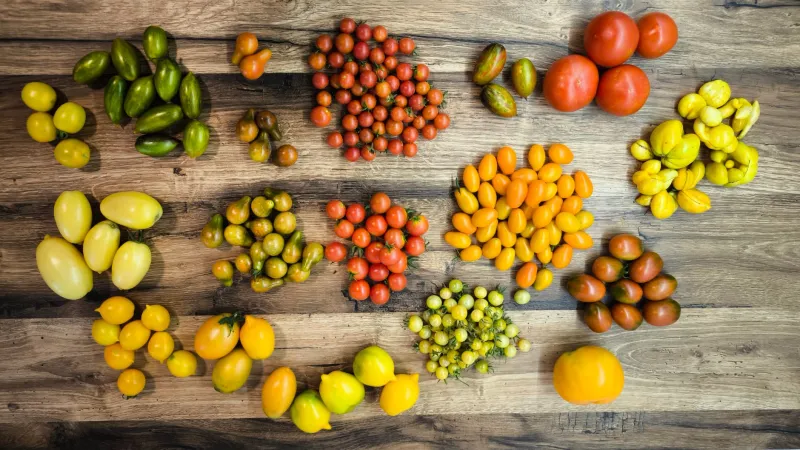
Somewhere between your great-grandmother's garden and the produce aisle at your nearest big-box grocery store, thousands of vegetables essentially ceased to exist.
Not in a dramatic, headline-grabbing way. More like a slow exhale. A seed catalog that stops listing a particular squash variety. A small farm that retires without passing along its prized pepper seeds. A community garden that switches to hybrid transplants because they're easier to source. One by one, quietly, irreplaceably — gone.
The numbers are genuinely staggering. According to research cited by the Seed Savers Exchange, roughly 93% of the seed varieties available in the United States in 1903 had vanished from commercial availability by the 1980s. And the erosion hasn't stopped. Today, a handful of multinational corporations control the majority of the global commercial seed supply, and they have little financial incentive to maintain varieties that don't ship well, ripen uniformly, or survive a cross-country truck ride looking camera-ready.
What gets lost in that consolidation isn't just agricultural diversity. It's flavor. History. Nutritional complexity. And frankly, some of the most interesting food that ever grew in American soil.
Why Industrial Agriculture Doesn't Care About Your Taste Buds
Here's the honest reality of how modern seed development works: commercial varieties are bred primarily for yield, shelf life, and visual consistency. A tomato that looks perfect after two weeks in cold storage will always beat out a tomato that tastes extraordinary but bruises if you look at it wrong. That's not cynicism — it's just supply chain economics.
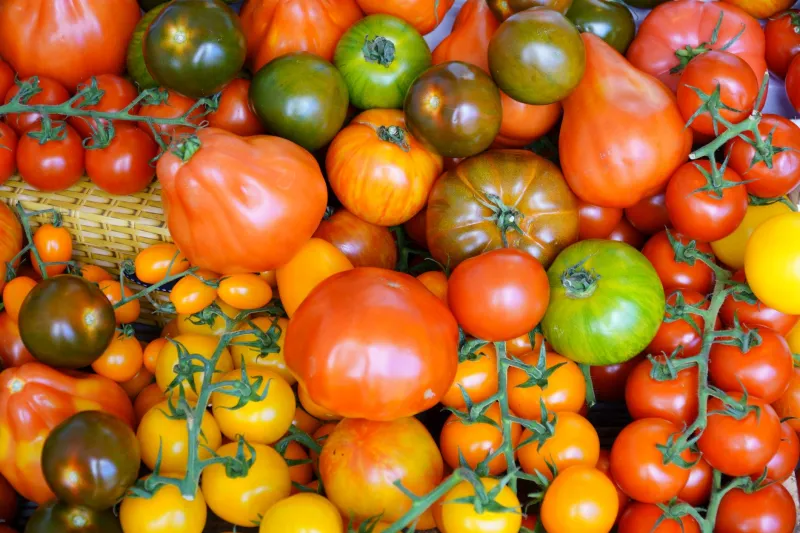
Heirloom varieties, by contrast, were developed over generations by farmers and gardeners who were optimizing for something entirely different: flavor, adaptability to local soil, nutritional density, and culinary versatility. The Mortgage Lifter tomato, famously bred by a West Virginia gardener named M.C. Byles in the 1930s, was selected specifically because it tasted incredible and grew abundantly enough to help him pay off his home loan. Nobody was thinking about freight logistics.
That difference in breeding priorities shows up in ways that matter at the table. Many heirloom vegetables contain higher concentrations of phytonutrients, antioxidants, and flavor compounds than their commercial counterparts — partly because those traits were selected for, and partly because genetic diversity itself tends to produce more complex chemistry in plants.
When we lose a variety, we lose that entire chemical fingerprint. Forever.
The Seed Library Movement Is Quietly Doing the Work
Fortunately, a loose but passionate network of seed stewards across the country has been pushing back against this erosion for decades.
Seed libraries — often housed inside public libraries, community centers, or local farms — operate on a beautifully simple premise: borrow seeds, grow them out, save the seeds from your best plants, and return a portion to the library for the next gardener. It's an agricultural lending system that keeps rare varieties alive through active cultivation rather than frozen storage.
"We have varieties in our collection that exist almost nowhere else in the United States," says one seed librarian at a community food center in the Pacific Northwest. "Some of them came from families who brought seeds over from Eastern Europe or Central America generations ago. They're not just plants — they're living cultural artifacts."
The Seed Savers Exchange, based in Decorah, Iowa, maintains one of the largest collections of heirloom and open-pollinated seeds in North America — over 20,000 varieties. Their work, along with regional seed libraries in nearly every state, represents a genuine grassroots counterweight to agricultural consolidation.
Heritage crop specialists are also making the case that heirloom preservation isn't just sentimental — it's strategic. "Genetic diversity is our agricultural insurance policy," explains a small farm operator in Vermont who specializes in rare dry beans. "When a new pest or disease hits, monocultures collapse. Diverse genetics mean some plants will always have natural resistance. We're not just saving pretty vegetables — we're maintaining the raw material for future food security."
What You Can Actually Do This Growing Season
Here's where things get genuinely empowering. Preserving heirloom diversity isn't something that requires a farm, a nonprofit, or a grant. It can start in a raised bed, a container on a balcony, or a single row in a community garden plot.
Start with open-pollinated seeds. Unlike hybrid or patented varieties, open-pollinated seeds reproduce true to type — meaning you can save seeds from your harvest and grow the same plant next year. Look for the terms "open-pollinated" or "OP" on seed packets. Heirlooms are always open-pollinated by definition.
Pick one variety to steward. You don't have to grow fifty rare vegetables. Choose one — maybe a Brandywine tomato, a Dragon Tongue bean, or a Chioggia beet — and commit to learning how to save its seeds properly. Each vegetable family has slightly different seed-saving requirements, but most are far simpler than people assume.
Connect with your local seed library. Search "seed library" plus your city or county name. You'll likely find one within driving distance. Many public libraries now participate in seed lending programs, and the people running them are almost always thrilled to share knowledge with new growers.
Join a seed swap. Organizations like the Seed Savers Exchange host annual seed swaps, and informal exchanges happen at farmers markets, community gardens, and online forums all over the country. These events are genuinely joyful — and you'll come home with varieties you've never seen in any catalog.
Grow something weird on purpose. Plant a purple cauliflower. Grow a yellow watermelon. Try the Dragon Tongue pepper or the Mortgage Lifter tomato. Every time you grow an heirloom variety and save its seeds, you extend that variety's survival by at least another generation. That's not a small thing.
The Garden as an Act of Resistance
At Kelly Tee Garden Organics, we believe that what you grow — and what you choose to preserve — is a political act as much as a personal one. When you save seeds from an heirloom squash and share them with your neighbor, you're actively disrupting the logic of agricultural consolidation. You're saying that food diversity belongs to communities, not corporations.
The varieties disappearing from American gardens aren't just vegetables. They're stories, adaptations, and flavors developed by generations of farmers who understood their land intimately. Losing them impoverishes all of us — nutritionally, culturally, and ecologically.
But here's the thing about seeds: they're extraordinarily stubborn survivors when someone decides to care for them. The Purple Dragon carrot doesn't have to disappear. Neither does the Moon and Stars watermelon, the Rattlesnake pole bean, or the Glass Gem corn that looks like it was made from stained glass.
All they need is someone willing to plant them, tend them, and save what comes next.
Maybe that someone is you.