The Chemical Treadmill: How Conventional Farming Got Hooked on Pesticides — And Why Organic Gets Off the Ride
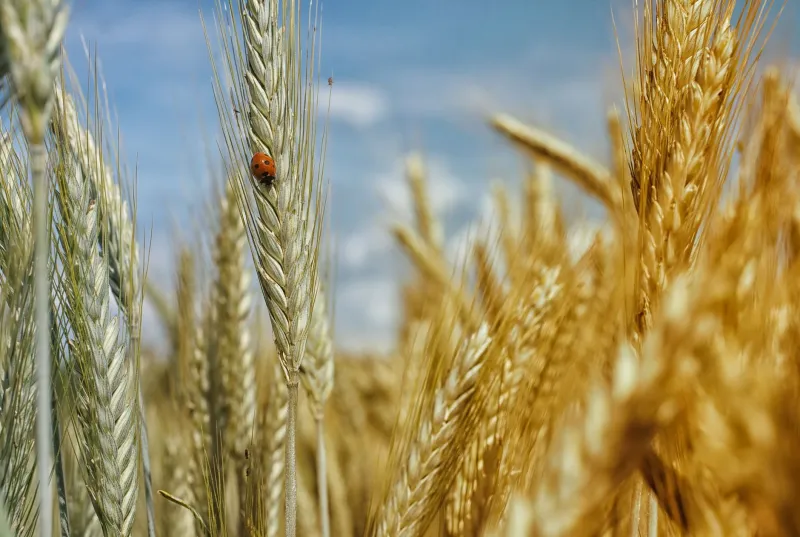
The Bug That Wouldn't Die
Imagine you've got a pest problem on your farm. You spray. Most of the bugs die — but not all of them. The ones that survive? They're the toughest of the bunch. They reproduce. Their offspring inherit that toughness. Within a few seasons, you're dealing with a population that laughs at your original pesticide. So you spray something stronger. Rinse, repeat.
That's not a hypothetical. That's the daily reality of conventional agriculture in America, and it has a name: pesticide resistance. It's one of the most well-documented — and least talked-about — crises in our food system.
According to the USDA, more than 500 species of insects and mites have developed resistance to at least one pesticide. That number has been climbing steadily since synthetic chemicals became the backbone of industrial farming after World War II. What started as a solution has, for many growers, quietly become the problem.
How the Spiral Actually Works
Here's the science without the jargon. When a pesticide is applied to a field, it kills the majority of the target pest population. But genetics are messy — there are always a few individuals carrying a random mutation that makes them slightly more resistant. Those survivors breed. Because they're not competing with the rest of their population anymore (the pesticide wiped everyone else out), their resistant offspring dominate the next generation.
Farmers, understandably, respond by increasing dosage or switching to a different chemical class. But the same selection pressure plays out again. Over time, farms can find themselves on a rotation of increasingly potent — and expensive — chemical inputs just to maintain the same level of pest control they had a decade ago.
The financial toll is staggering. A 2020 study published in the journal Pest Management Science estimated that pesticide resistance costs U.S. agriculture somewhere between $1.5 and $10 billion annually, depending on the crop and region. That's not the cost of pesticides themselves — that's the cost of them not working.
Corn Belt Reality Check
Look at what's happened with rootworm in the Midwest. Corn rootworm was once effectively managed with crop rotation — a simple, low-cost practice where farmers alternated corn with soybeans year to year, disrupting the pest's life cycle. But as corn prices rose and rotation became less economically attractive, many farmers switched to genetically modified Bt corn, which produces its own insecticidal protein.
For a while, it worked beautifully. Then, predictably, it didn't. Rootworm populations in Iowa, Illinois, and Nebraska began showing resistance to Bt toxins within a decade of widespread adoption. Farmers who had abandoned rotation now faced resistant pests and had lost the cultural practices that once kept populations in check. Many ended up layering soil-applied insecticides on top of their Bt traits — paying twice for pest management that used to cost almost nothing.
This isn't a story about bad farmers making bad choices. It's a story about a system that keeps selling the next solution to the problem the last solution created.
What Organic Farming Actually Does Differently
Organic farming doesn't just swap synthetic pesticides for organic-approved ones — though that's a common misconception. At its core, organic pest management is about building systems where catastrophic pest outbreaks are less likely to happen in the first place.
Here's how that plays out on real farms:
Biodiversity as a buffer. Conventional monocultures — thousands of acres of a single crop — are essentially all-you-can-eat buffets for specialized pests. Organic operations, particularly smaller diversified farms, plant a mix of crops, cover crops, and flowering borders that support predatory insects. Ladybugs, lacewings, parasitic wasps — these are free pest control, and they show up when there's habitat for them.
Soil health as pest defense. This one surprises people. Healthy, biologically active soil produces plants with stronger cell walls and more robust immune responses. Research from the Rodale Institute has shown that organically grown crops often have higher levels of phenolic compounds — natural defense chemicals that make plants less palatable to insects and more resistant to disease.
Disrupting pest cycles through rotation. Organic certification standards require meaningful crop rotation, which breaks the population cycles that allow pest and disease pressure to build year over year. It's the same logic as the old rootworm rotation — except organic farmers never abandoned it.
The Long-Game Cost Comparison
Yes, transitioning to organic has upfront costs. The three-year certification window, the learning curve, the yield dip that sometimes happens while soil biology rebuilds — none of that is trivial. But look at what happens on the other side.
A long-term study from the Rodale Institute's Farming Systems Trial — one of the longest-running comparisons of organic and conventional agriculture in the country — found that after the transition period, organic systems achieved comparable yields to conventional ones in most years, with significantly lower input costs. In drought years, organic plots actually outperformed conventional ones, largely due to better soil water retention.
On the pest management side specifically, farms that have been under organic management for 10 or more years consistently report lower overall pest pressure — not because they've eliminated pests, but because they've built systems where natural checks and balances keep populations from exploding. That's a fundamentally different relationship with the land than one built on chemical intervention.
The Ecosystem Debt Nobody Talks About
There's a cost that doesn't show up on any farm's balance sheet: what pesticide escalation does to the surrounding ecosystem. Pesticide drift affects neighboring farms and wild habitats. Runoff contaminates waterways. Broad-spectrum insecticides don't distinguish between corn rootworm and the native bee pollinating your neighbor's squash.
The decline of pollinator populations in the U.S. is well-documented, and while it has multiple causes, pesticide exposure — particularly to neonicotinoids — is consistently identified as a major driver. When pollinators decline, crop yields across the entire agricultural system suffer, including for farms that had nothing to do with the original chemical application.
Organic farming isn't perfect, and organic-approved pesticides aren't consequence-free. But the fundamental philosophy — use chemistry as a last resort, not a first line of defense — produces a meaningfully different environmental footprint over time.
What This Means for What You Buy
Every time you choose organically grown produce, you're not just avoiding a residue on your apple. You're casting a vote for a farming model that doesn't depend on an ever-escalating chemical arms race. You're supporting farmers who've invested in soil biology, beneficial insect habitat, and rotational practices that cost the land less over decades.
At Kelly Tee Garden Organics, we think about this every season. Building a garden — or a farm — that works with natural systems instead of constantly fighting them isn't just an ideology. It's practical. It's sustainable in the truest sense of the word. And increasingly, as the limits of the chemical treadmill become harder to ignore, it's starting to look like the only approach that actually has a future.