Shop the Market Like a Pro: The Sensory Secrets to Picking Perfect Produce Every Time
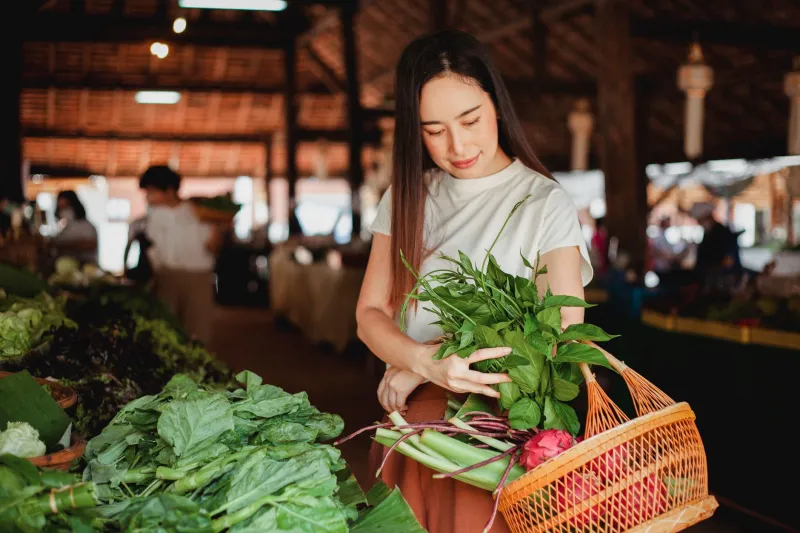
Here's a scene you've probably lived: you grab a gorgeous-looking tomato at the farmers market, bring it home, slice it open, and get... nothing. Pale flesh. Zero aroma. A vague sadness.
But the person two stalls ahead of you walked away with something that smelled like summer and tasted like it, too. What did they know that you didn't?
A lot, actually. And it's all learnable.
Shopping a farmers market well is a skill — not an instinct, not a gift. It's closer to wine tasting than most people realize. A sommelier doesn't just look at the label. They swirl, sniff, observe color depth, notice how the liquid moves. They're reading a whole story before the first sip. You can do the exact same thing with a handful of green beans or a fragrant cantaloupe. Here's how.
Start With Your Nose (Seriously, Lead With It)
Aroma is the single most underused tool in produce shopping. It's also the most honest signal you've got.
Ripe, flavorful produce announces itself. A strawberry that smells intensely sweet and floral before you even taste it will almost always deliver on that promise. A strawberry that smells like nothing — no matter how red and shiny it looks — is going to taste like nothing. The same logic applies to peaches, melons, herbs, tomatoes, and stone fruits across the board.
This isn't magic. It's chemistry. Aromatic compounds called volatile esters and terpenes build up as produce ripens and as soil health improves. Organically grown fruits and vegetables, especially those grown in mineral-rich, biologically active soil, tend to produce more of these compounds. That's why a tomato from a small organic farm can stop you in your tracks from three feet away while a supermarket version barely registers.
At the market, don't be shy. Pick things up. Bring them close. Smell the stem end of a melon, the shoulder of a tomato, the base of a bunch of basil. If it's good, you'll know.
Color Depth Is a Nutritional Map
Bright color in produce isn't just pretty — it's information. Deep, saturated pigments are often a direct indicator of phytonutrient concentration. That vivid purple in a beet or the almost-neon orange of a well-grown carrot signals anthocyanins and beta-carotene, respectively. Pale, washed-out versions of the same vegetables often have less of both.
When you're moving through a market, train your eye to look for intensity. Compare the greens side by side. Which bunch of kale has that blue-green depth? Which looks slightly yellowy or faded? The darker one was likely grown in richer soil, harvested closer to peak maturity, and hasn't sat in a refrigerated truck for a week.
This is especially useful for leafy greens, peppers, and root vegetables. A deep red bell pepper beats a pale orange-red one almost every time on both flavor and nutrient density.
The Touch Test: What Texture Tells You
Sommeliers talk about body — the weight and texture of a wine in the mouth. You can read something similar through your fingertips before you even buy.
For most produce, what you're feeling for is firmness with a little give. A peach that's rock hard isn't ready. One that's mushy is past it. But one that yields slightly under thumb pressure, especially near the stem? That's your window.
For root vegetables like carrots and beets, firmness is everything. Any softness or sponginess means they've lost moisture — and with it, crunch, flavor, and nutrition. For leafy greens, you want leaves that feel crisp and almost springy, not limp or papery.
Here's a pro move for melons: tap the underside with your knuckles. A ripe watermelon produces a deep, hollow thud. An underripe one sounds higher-pitched and tight. It sounds a little ridiculous until it works — and then you'll do it every time.
Read the Farmer, Not Just the Food
This is where farmers market shopping diverges completely from anything you can do in a grocery store: you can just ask.
The person behind the table grew this food. They know what variety it is, when it was harvested, how the soil is managed, whether they use cover crops or compost. A five-minute conversation can tell you more than any label ever could.
Ask things like: What variety is this tomato? When did you pick it? What do you do for soil fertility? Most small-scale growers love these questions. They'll tell you which items are at absolute peak right now, which ones to skip this week, and which variety in their lineup tends to blow people away.
At Kelly Tee Garden Organics, we believe that relationship is the whole point. Knowing your grower — understanding their methods, their challenges, their pride in what they do — transforms a transaction into something more meaningful. It's the difference between eating food and understanding it.
When to Trust Your Eyes and When to Ignore Them
Here's a counterintuitive truth: sometimes the most beautiful produce is the least interesting to eat.
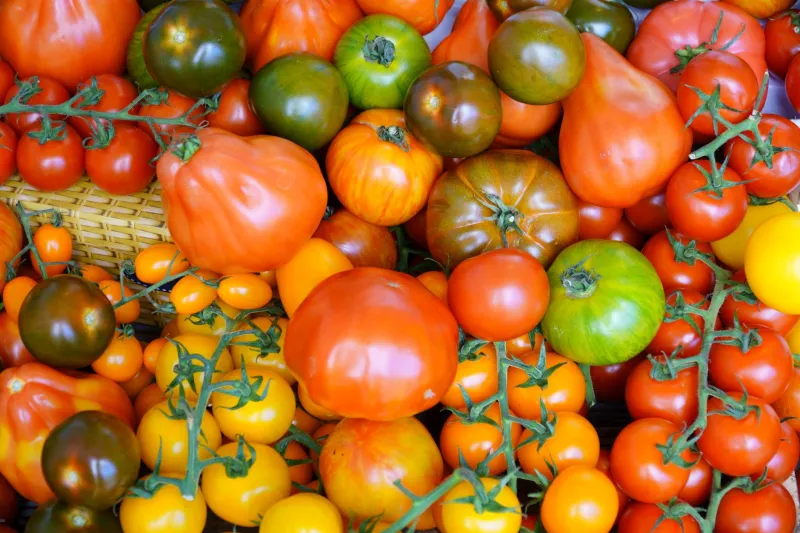
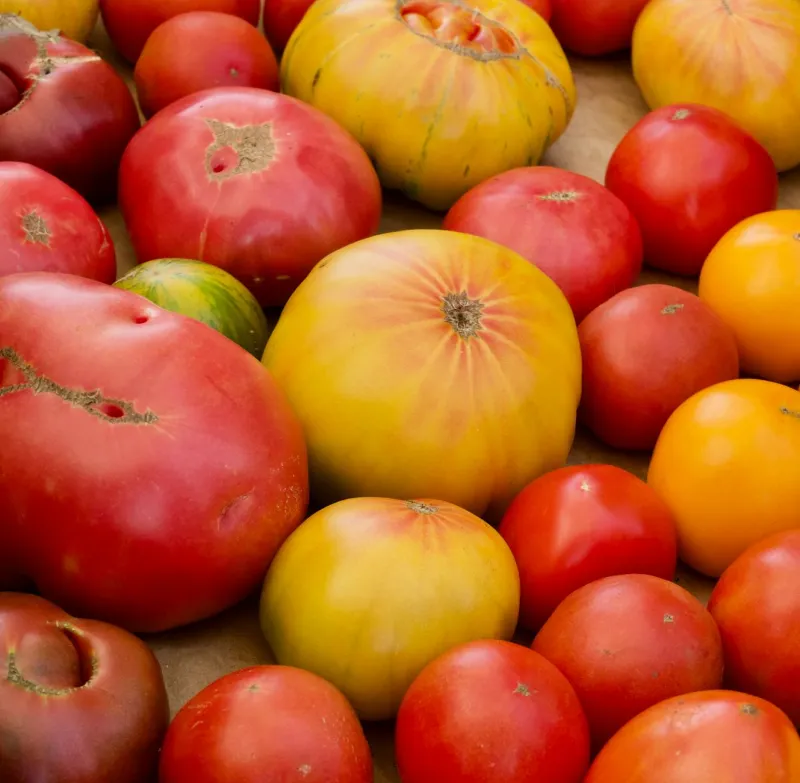
Perfectly uniform, blemish-free vegetables are often the product of selection for appearance over flavor. Heirloom tomatoes may look cracked, lumpy, or unevenly colored — and be extraordinary. Ugly carrots from mineral-dense soil often out-taste their prettier commercial counterparts by a mile.
Learn to look past cosmetic perfection and focus on the sensory signals that actually matter: aroma, color depth, texture, and weight. A heavy tomato for its size suggests high water content and density. A light one for the same size might be hollow or mealy inside.
Blemishes from pest pressure or minor sun damage are usually cosmetic. A small surface scar on a peach doesn't affect flavor. A soft, bruised spot does — so feel around it, not just at it.
Build Your Market Vocabulary Over Time
Like any skill, this gets sharper with practice. The first few times you apply these techniques, you might feel a little uncertain. By the fifth or sixth week, you'll start to notice patterns. You'll remember that the booth with the deep purple eggplants always delivers, that early-season strawberries from one farm smell richer than another, that the farmer who talks most about soil biology consistently has the best-tasting greens.
You're building a palate — not just for taste, but for quality. That's what a sommelier does over years of tasting. You're doing the same thing, just with tomatoes and melons instead of Pinot Noir.
And honestly? It's just as satisfying.
The farmers market is one of the few places left in American food culture where quality is still legible — where you can read it with your own senses, ask the person who grew it, and make choices that actually reflect what you value. That's not a small thing. That's a skill worth developing.
Bring your nose. Use your hands. Ask questions. And trust that the more you show up and pay attention, the better every meal is going to get.