Bred for the Truck, Not the Table: How We Lost the Tomato — and How to Get It Back
There's a particular kind of heartbreak that lives in a grocery store tomato. It looks the part — round, red, glossy. It smells faintly promising. Then you bite into it and get... almost nothing. A little water. A whisper of acid. A texture somewhere between foam and disappointment.
If you've ever eaten a tomato from an older relative's garden and felt genuinely shocked by the difference, you weren't imagining things. That gap is real, it's documented, and it didn't happen by accident.
The Great Flavor Purge
Starting in the 1950s and accelerating through the 1970s and 80s, commercial tomato breeding underwent a quiet but radical transformation. Seed companies and large agricultural operations weren't selecting for taste. They were selecting for logistics.
The ideal commercial tomato needed to ripen uniformly so it could be harvested by machine. It needed a thick skin that wouldn't split during a 2,000-mile refrigerated truck ride. It needed to sit on a shelf for two weeks without going soft. And it needed to look picture-perfect under fluorescent lighting.
Flavor? That was someone else's problem.
Here's the science behind why that matters: tomatoes get their complex taste from a combination of sugars, acids, and volatile aromatic compounds — there are over 400 of them. Many of those volatiles are produced in the same metabolic pathways that also make the fruit soft and perishable. When breeders selected for firmness and long shelf life, they were, often unknowingly, selecting against the very compounds that make a tomato taste like a tomato.
A landmark 2012 study published in Science identified a specific genetic mutation — found in almost every commercial tomato variety — that disrupts the ripening process in a way that keeps fruit firm but dramatically reduces sugar content. Breeders had been selecting for that mutation for decades without fully understanding what they were giving up.
Seeds That Remember
Not everyone went along with it.
Across the country, a loose network of seed savers, heirloom farmers, and backyard growers spent those same decades quietly doing the opposite — preserving old varieties that the commercial system had written off as too fragile, too weird-looking, or too inconvenient to scale.
Diane Ott Whealy and Kent Whealy founded Seed Savers Exchange in Decorah, Iowa in 1975, starting with seeds passed down from a dying relative. What grew from that act of preservation is now one of the largest non-governmental seed libraries in the United States, holding thousands of varieties that never made it into the commercial pipeline.
"These seeds carry memory," one longtime seed saver and small-farm operator in the Hudson Valley told us. "When you grow a Brandywine that came from a family that's been saving it since the 1880s, you're tasting something that survived because people loved it enough to keep it alive. That's not marketing. That's actual history."
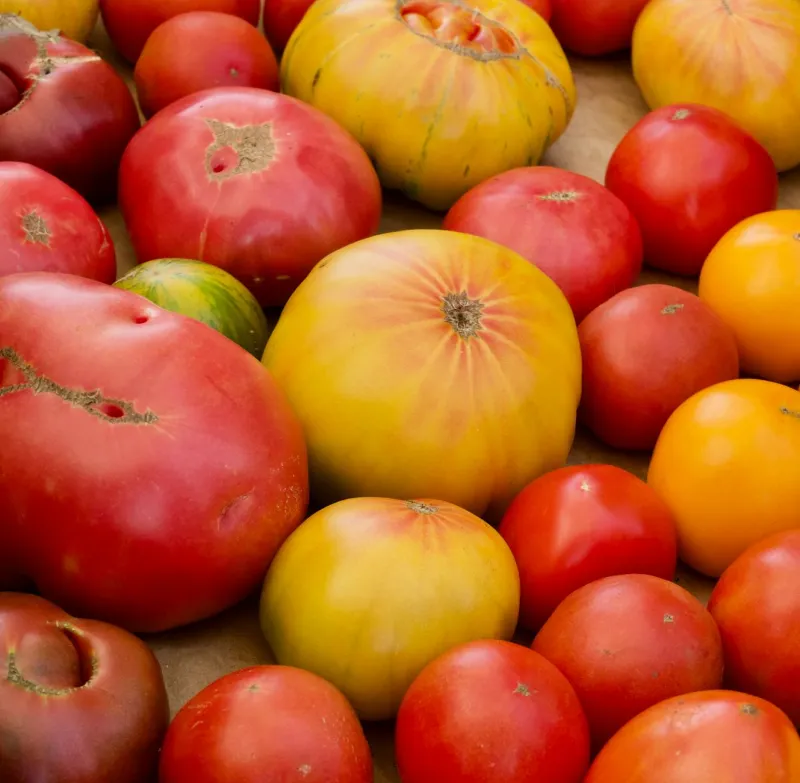
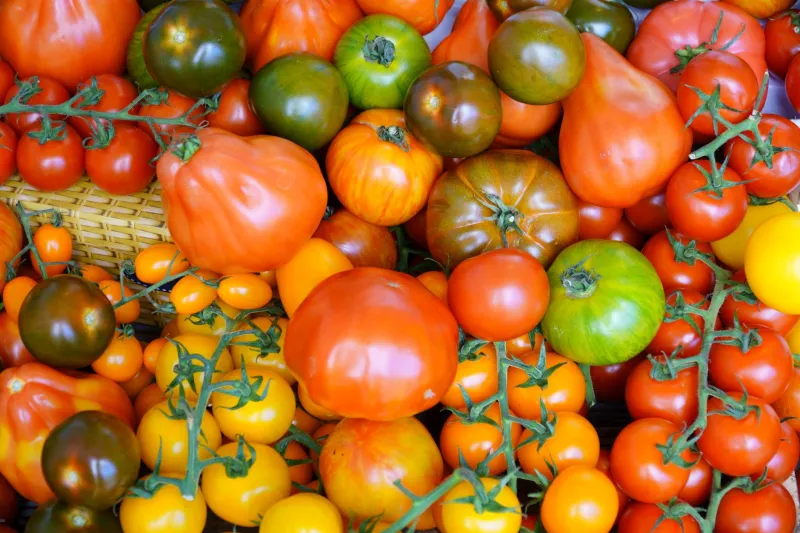
The varieties they're protecting read like a lost catalog of flavor: Cherokee Purple, with its complex sweet-smoky depth and deep mahogany skin. Green Zebra, tart and bright and nothing like anything you'd find in a supermarket. Mortgage Lifter, a massive pink beefsteak that a West Virginia man named Radiator Charlie bred in the 1930s and sold for a dollar a seedling until he'd paid off his house.
These tomatoes weren't bred for trucks. They were bred for tables.
What Was Actually Bred Out
The flavor compounds most dramatically reduced in commercial varieties include geranylacetone, which contributes a floral, fruity note; 2-methylbutanal, which adds a rich, complex depth; and several carotenoid-derived volatiles that give heirloom tomatoes their distinctive aroma before you even take a bite.
Beyond volatiles, the sugar-to-acid ratio in many commercial varieties has shifted toward blandness. Heirloom tomatoes tend to have higher concentrations of both — more sweetness and more acidity — which creates that bright, layered flavor that makes you want to eat them plain with salt and nothing else.
The color difference is telling, too. That uniform red you see in supermarket tomatoes? It's partly the result of selecting against chlorophyll retention, which gives older varieties their complex color variation. But chlorophyll breakdown is also connected to flavor development. When you breed for that perfect red, you're trimming flavor at the same time.
Finding the Good Stuff Right Now
You don't have to wait until you have a garden to taste what you've been missing. Here's where to start:
Farmers markets are your fastest route. Look for vendors selling tomatoes in colors other than uniform red — anything with stripes, green shoulders, purple blush, or deep pink is almost certainly not a commercial variety. Ask the farmer directly what variety it is. Any grower worth their salt will know.
Community-supported agriculture (CSA) boxes from small local farms often include heirloom and open-pollinated varieties that never touch the commercial supply chain. Search LocalHarvest.org or the USDA's CSA directory to find options near you.
Specialty grocery stores and food co-ops in most mid-size and large cities now carry heirloom tomatoes during summer months. They'll cost more — sometimes significantly more — but they're a different food product entirely.
Growing Your Own in Small Spaces
Here's something the seed industry doesn't always advertise loudly: most heirloom tomatoes are easier to grow than you'd expect, and many do beautifully in containers.
- Mortgage Lifter and Brandywine are large-plant indeterminate varieties that need space — a big container (at least 15 gallons) or a garden bed. But their flavor payoff is extraordinary.
- Tumbling Tom and Tiny Tim are compact determinate varieties that thrive in hanging baskets or small pots on a balcony.
- Black Cherry produces clusters of deeply flavored dark fruit on manageable vines — perfect for a patio or a fire escape with decent sun.
Start seeds indoors 6-8 weeks before your last frost date (check the Old Farmer's Almanac for your zip code). Use organic potting mix, give them as much light as possible, and once they're outside, resist the urge to overwater — slightly stressed tomato plants concentrate flavor in their fruit.
For seeds, Seed Savers Exchange, Baker Creek Heirloom Seeds, and Territorial Seed Company all carry extensive heirloom tomato selections with detailed flavor notes. Many local seed libraries — often housed in public libraries — will let you borrow seeds for free in exchange for returning some at the end of the season.
The Tomato Is a Political Act
Choosing an heirloom tomato over a commercial one is, in a small but real way, a vote. It's a vote for the farmers who stake their livelihoods on flavor. It's a vote for the seed savers who spent decades preserving genetic diversity that the market had no interest in protecting. And it's a vote against a food system that decided your taste buds were less important than a truck schedule.
Your grandmother's tomato isn't gone. It's just been waiting — in a seed envelope, in a small farm's row, in a backyard pot on a sunny porch — for someone to grow it back into the world.
This summer, be that person.