Eat With the Calendar: A Month-by-Month Map to the Most Nutritious Produce of the Year
Let's be honest about that grocery store strawberry in January. It's beautiful. It's bright red. It smells like almost nothing, and when you bite into it, it tastes like a very mild memory of a strawberry. That's not a coincidence—it's a direct result of what happens when a fruit is harvested underripe, trucked across a continent, and sold weeks later under fluorescent lights.
Seasonal eating isn't about being precious or nostalgic. It's about understanding that fruits and vegetables are living things, and that timing matters enormously when it comes to what they actually deliver nutritionally. At Kelly Tee Garden Organics, we've built our whole philosophy around this idea: food grown with intention and eaten at the right moment is a fundamentally different experience—for your taste buds and your body.
Here's your practical, no-fuss guide to eating with the calendar.
Why Nutrition and Timing Are Inseparable
Producing nutrients is expensive for a plant. Vitamins, antioxidants, phytochemicals—these compounds develop in response to sunlight, soil biology, and the natural ripening process. When a tomato fully ripens on the vine in August sun, it accumulates lycopene, vitamin C, and a cascade of antioxidants that it simply can't produce if it's picked green and ripened artificially in a warehouse.
Research from the University of California found that spinach lost between 53% and 90% of its folate within eight days of harvest under refrigerated conditions. A study in the Journal of Agricultural and Food Chemistry showed that some fresh-picked broccoli contained up to three times more glucosinolates—potent cancer-fighting compounds—than the same broccoli measured after typical commercial storage and transport times.
The nutrient gap between peak-season, locally grown produce and off-season, long-haul produce is real, measurable, and significant. Seasonal eating closes that gap.
A Month-by-Month Breakdown (By US Region)
The US is a big country, so "in season" looks different depending on where you live. Here's a general guide—use it as a starting point and check in with your local farmers market for the specifics in your area.
January & February
What's peaking: Citrus (Florida, California, Texas), root vegetables like turnips and parsnips, winter squash, kale, collard greens, Brussels sprouts
This is citrus season in the South and on the West Coast, and it could not be better timed. Vitamin C peaks in freshly harvested citrus, and your immune system in January genuinely wants that. Roast a sheet pan of root vegetables with olive oil and herbs—it's one of the most nourishing, low-effort meals you can make.
Storage tip: Winter squash keeps beautifully in a cool, dry spot for weeks. Buy in bulk when prices drop.
March & April
What's peaking: Early greens (arugula, spinach, chard), asparagus, peas, radishes, green onions
Spring is the season of tender leaves and bright flavors. Asparagus is one of the best sources of folate and prebiotic fiber, and it's dramatically better in April than it is in November. Eat it simply—roasted or quickly sautéed—so the flavor does the work.
Simple recipe: Shaved asparagus salad with lemon, olive oil, parmesan, and toasted almonds. Takes ten minutes. Tastes like spring decided to show up personally.
May & June
What's peaking: Strawberries (nationwide), cherries (Pacific Northwest), early tomatoes (South), snap peas, zucchini, herbs
This is the moment strawberries were born for. A June strawberry from a local farm is a completely different food than its January counterpart—sweeter, more aromatic, and significantly higher in vitamin C and anthocyanins. Cherries are one of the few natural sources of melatonin and are loaded with anti-inflammatory compounds that peak at harvest.
Storage tip: Don't wash strawberries until you're ready to eat them—moisture speeds up breakdown. Store them in a single layer if possible.
July & August
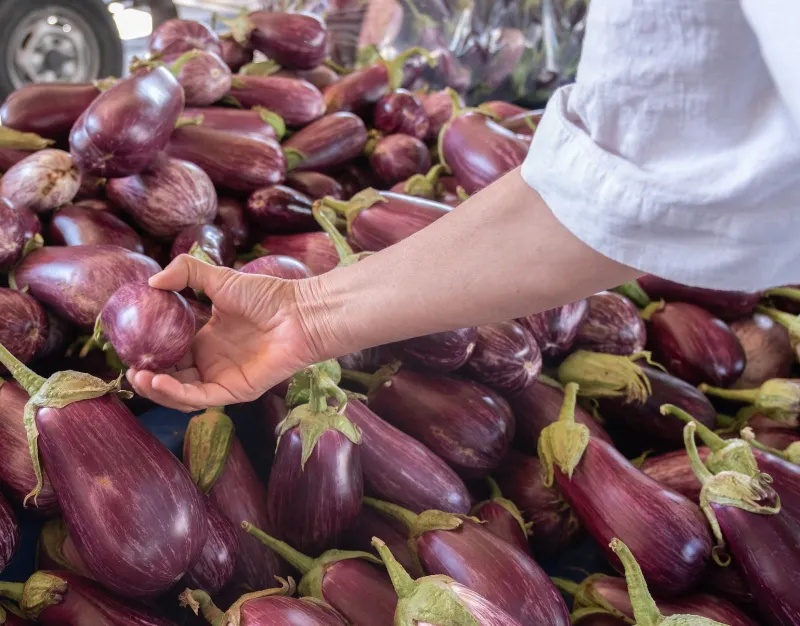
What's peaking: Tomatoes, corn, peaches, blueberries, cucumbers, eggplant, peppers, green beans, summer squash
This is peak season in most of the US, and it's glorious. Tomatoes in August are lycopene powerhouses. Blueberries are at their highest antioxidant concentration. Peaches deliver beta-carotene, vitamin C, and potassium in a package that tastes like summer decided to become a fruit.
If you can only do one thing seasonally all year, do this: eat tomatoes in August. The difference in flavor and nutrition compared to any other month is staggering.
Simple recipe: Heirloom tomato salad with torn basil, flaky salt, good olive oil, and a splash of red wine vinegar. Let it sit for 20 minutes before eating. That's it. That's the recipe.
September & October
What's peaking: Apples, pears, winter squash, sweet potatoes, beets, broccoli, cauliflower, kale, Brussels sprouts
Fall is the season of slow cooking and deep nutrition. Sweet potatoes are one of the most nutrient-dense foods on the planet—beta-carotene, potassium, fiber, B6—and they're at their best right after harvest in the fall. Apples hit their flavor and nutritional peak in October; the polyphenol content in freshly picked apples is significantly higher than in stored fruit from cold-chain distribution.
Storage tip: Sweet potatoes should not be refrigerated—cold temperatures convert their starch to sugar in a way that affects flavor and texture. Store them in a cool, dark pantry instead.
November & December
What's peaking: Late-season root vegetables, winter greens, citrus (beginning of season), pomegranates, pears
Pomegranates are a December gem that most people overlook. They're extraordinarily high in punicalagins, a class of antioxidants that research suggests may have significant cardiovascular benefits. Pair them with hearty winter greens for a salad that punches way above its weight nutritionally.
The Carbon Argument Is Real Too
Beyond nutrition, eating seasonally and locally has a measurable environmental upside. The average American meal travels about 1,500 miles from farm to plate. Refrigerated air freight—used to import off-season produce—produces roughly 50 times more carbon emissions per ton-mile than sea freight, and hundreds of times more than local ground transport.
When you buy a locally grown, in-season vegetable from a farm within 100 miles of your home, you're participating in a dramatically lower-carbon food system. Not perfectly zero-carbon, but meaningfully better.
Making It Work Without Feeling Restricted
The biggest pushback on seasonal eating is that it feels limiting. Here's the reframe: it's actually a creativity engine. When you commit to cooking what's available right now, you stop defaulting to the same ten recipes on rotation and start actually engaging with food.
A few practical moves:
- Join a CSA (Community Supported Agriculture) share. You get a weekly box of whatever's peaking on a local farm. It forces seasonal eating in the best possible way and usually costs less than equivalent grocery store produce.
- Freeze at peak. Blueberries, corn, green beans, and tomatoes all freeze beautifully. Stock up in July and August so you have genuinely nutritious options in February.
- Use the USDA's Seasonal Produce Guide or apps like Seasonal Food Guide, which let you filter by state and month.
Seasonal eating isn't a sacrifice. It's a recalibration—one that brings you closer to the food, the farmers who grow it, and the nutritional payoff your body is actually waiting for. The calendar has always been the best recipe book. We just forgot to read it.