Your Gut Is Listening to Your Soil: The Surprising Science Behind Why Organic Food Hits Different
The Invisible World Beneath Your Feet (And Inside Your Body)
There are more microorganisms in a single teaspoon of healthy organic soil than there are people on Earth. That fact tends to stop people in their tracks, and it should — because that same invisible universe of bacteria, fungi, and protozoa is directly connected to the food on your plate, and, researchers are increasingly arguing, to the trillions of microbes that govern your digestion, immunity, and even your mood.
We've spent decades thinking about nutrition in terms of macros and vitamins — calories, protein grams, vitamin C percentages. But the emerging field of microbiome science is quietly rewriting that framework. And at the center of that rewrite is a surprisingly simple idea: the health of your gut may begin not in your body, but in the ground where your food was grown.
What "Living Soil" Actually Means
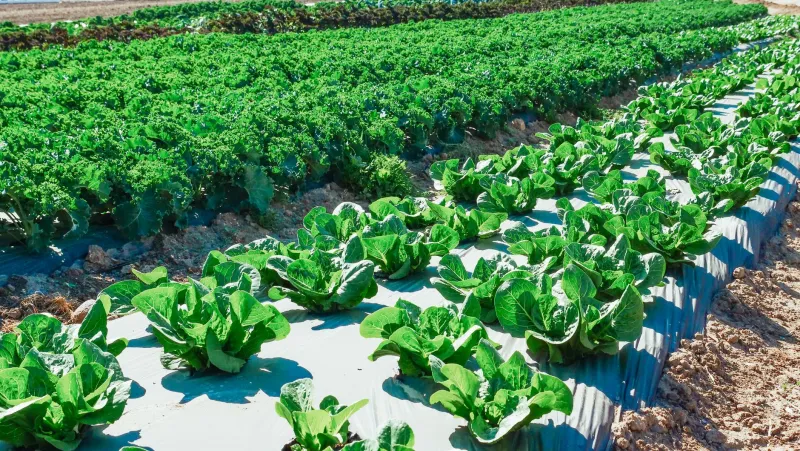
Conventional farming, for all its productivity, has a soil problem. Decades of synthetic fertilizer use, pesticide application, and mechanical tillage have stripped many American farmlands of their biological complexity. What's left is often structurally intact dirt that can grow food — but lacks the microbial richness that once defined it.
Organic farming, by contrast, prioritizes soil biology as a foundation rather than an afterthought. Practices like composting, cover cropping, reduced tillage, and crop rotation actively feed the soil food web — the interconnected community of organisms that break down organic matter, fix nitrogen, suppress pathogens, and, critically, make nutrients bioavailable to plants.
"We think of soil as a medium for growing plants," says Dr. Priya Nair, a soil ecologist at a research university in the Pacific Northwest who has spent fifteen years studying microbial communities in organic versus conventional farming systems. "But it's really a living ecosystem. When that ecosystem is intact, the plants growing in it are fundamentally different — biochemically different — from plants grown in depleted soil."
That biochemical difference is where the gut health story begins.
From Root to Gut: The Nutrient Density Argument
Plants grown in biologically rich soil tend to produce higher concentrations of phytonutrients — the compounds like polyphenols, flavonoids, and antioxidants that give colorful vegetables their health-promoting properties. This isn't coincidental. Many of these compounds are produced by plants as a response to environmental stressors and microbial interactions that simply don't occur in heavily managed, input-dependent growing systems.
A 2014 meta-analysis published in the British Journal of Nutrition, one of the largest of its kind, found that organically grown crops contained significantly higher concentrations of antioxidants compared to their conventionally grown counterparts — in some cases up to 69% more certain polyphenols. More recent research has continued to build on that foundation, with particular attention to how soil microbial diversity influences the secondary metabolite profiles of food crops.
For your gut, those phytonutrients aren't just antioxidants in the abstract — they're prebiotics, signaling molecules, and anti-inflammatory compounds that actively shape the microbial environment in your digestive tract.
"We're starting to understand that food isn't just fuel," explains registered dietitian and gut health specialist Tamara Chen, who works with patients in the Chicago area. "It's information. And the information in a carrot grown in living soil is genuinely different from the information in a carrot grown in a nutrient-solution setup. Your microbiome responds to that difference."
Pesticide Residues and the Microbiome Disruption Question
Beyond nutrient density, there's the residue question — and it's one the research community is taking increasingly seriously. Glyphosate, the world's most widely used herbicide and a common presence in conventional agriculture, was originally patented as an antibiotic. That detail matters because antibiotics, by definition, kill bacteria — including the bacteria in your gut.
While regulatory agencies maintain that glyphosate residue levels in food are below harmful thresholds, a growing number of microbiome researchers are questioning whether those thresholds account for cumulative, low-level exposure over time. A 2021 review in the journal Environmental Health Perspectives raised concerns about subthreshold pesticide exposures and their potential to disrupt gut microbial balance, particularly in vulnerable populations including children and pregnant women.
Organic produce, by eliminating synthetic pesticide use, removes that variable entirely. It's not a guarantee of perfect gut health — but it eliminates a potential chronic disruptor from the equation.
The Fermentation Connection
Here's where things get genuinely exciting for food lovers. The microbial richness of organically grown produce doesn't just affect your gut after you eat it — it can shape the fermentation process itself when you're preparing certain foods.
Fermented vegetables like sauerkraut, kimchi, and lacto-fermented pickles rely on wild, naturally occurring bacteria present on the surface of the vegetables. Organic produce, grown without bactericidal chemical treatments, tends to host a more diverse and robust community of these beneficial lacto-fermentation bacteria.
At Kelly Tee Garden Organics, we've seen this firsthand. Ferments made with freshly harvested organic cabbage from small farms consistently develop more complex, layered flavors than those made with conventional supermarket produce — and the microbial diversity in the finished product reflects that difference.
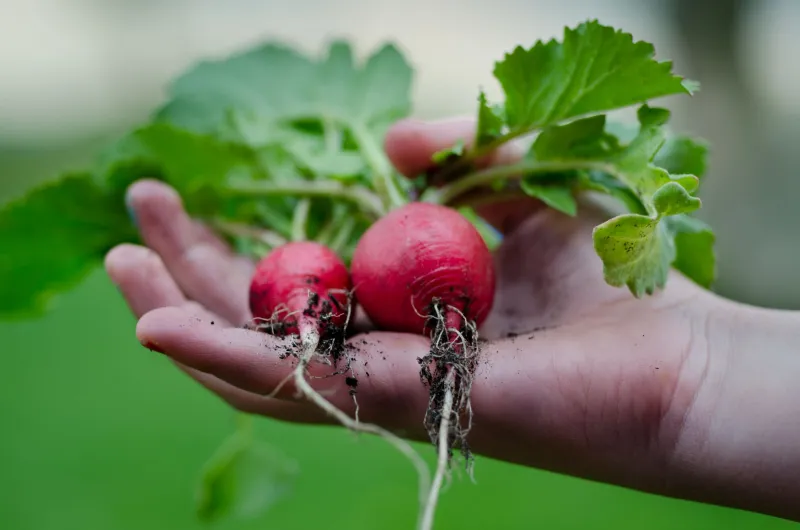
Simple Lacto-Fermented Radishes (A Gut-Health Starting Point)
Ingredients:
- 1 bunch organic radishes, thinly sliced
- 1 tablespoon non-iodized sea salt
- 1 cup filtered water
- Optional: 2 garlic cloves, a pinch of red pepper flakes
Instructions: Dissolve salt in water to create a brine. Pack radishes (and optional additions) into a clean mason jar. Pour brine over, ensuring radishes are fully submerged. Weigh down with a small zip-lock bag filled with brine. Cover loosely and leave at room temperature for 3–5 days. Taste daily. Refrigerate when pleasantly tangy.
This is fermentation at its most elemental — and it works best when the produce you start with is as alive as possible.
Buying Smarter for Your Microbiome
You don't have to overhaul your entire grocery budget to start making microbiome-supportive choices. Here's a practical approach:
Prioritize the Dirty Dozen. The Environmental Working Group's annual Dirty Dozen list identifies the conventionally grown crops with the highest pesticide residue loads — strawberries, spinach, kale, peaches, and apples consistently rank near the top. Switching just these items to organic has an outsized impact relative to cost.
Buy local when possible. Produce that travels shorter distances is harvested closer to peak ripeness, meaning higher phytonutrient concentrations reach your plate. A locally grown organic tomato eaten within days of harvest is nutritionally distinct from a certified organic tomato that spent two weeks in a refrigerated truck.
Eat the skin. Many of the beneficial compounds in organic produce are concentrated in or just beneath the skin. When you know your produce is clean, don't peel it.
Diversify aggressively. Gut microbiome researchers consistently identify dietary diversity — particularly plant diversity — as one of the strongest predictors of a healthy gut ecosystem. Aim for 30 different plant foods per week, a target that becomes much more achievable and delicious when you're shopping seasonally at a local farm or market.
The Bottom Line
The soil-to-stomach connection isn't metaphor. It's microbiology. The evidence linking soil health, organic farming practices, and human gut health is still developing — science rarely moves in straight lines — but the direction of that evidence is consistent and increasingly hard to dismiss.
Spending a bit more on genuinely organic, locally grown produce isn't a luxury splurge. It's an investment in a food system that treats the ground beneath us as a living thing worth protecting — and in a body that, it turns out, is listening very carefully to every bite.