Stop Believing the Organic Food Price Myth: A Real-Talk Guide to Eating Clean Without Going Broke
Let's Just Say It: The "Organic Is Expensive" Argument Doesn't Hold Up
We hear it all the time. Someone picks up a bunch of our carrots at the farmers market, eyes the price tag, and says, "I'd love to buy local organic, but I just can't afford it." We get it — the sticker shock is real, especially when you're comparing a $3 bunch of organic carrots to a $1.29 bag from the supermarket shelf. But here's the thing: that comparison is doing a lot of heavy lifting, and it's leaving out most of the story.
The true cost of food is almost never what's printed on the label. And when you start doing the actual math — cost per serving, food waste rates, health outcomes over time, and what you're not spending on processed foods — the math on local organic eating starts to look very different. Sometimes dramatically so.
This isn't a lecture. It's a practical breakdown of how real families are making it work, with strategies pulled straight from our Kelly Tee community.
The Real Cost Comparison: Let's Do the Math
Conventional wisdom says a trip to the farmers market will blow your grocery budget. But let's look at some actual numbers.
Conventional supermarket romaine lettuce: $2.49 for a head that yields roughly 6 servings. That's about $0.42 per serving.
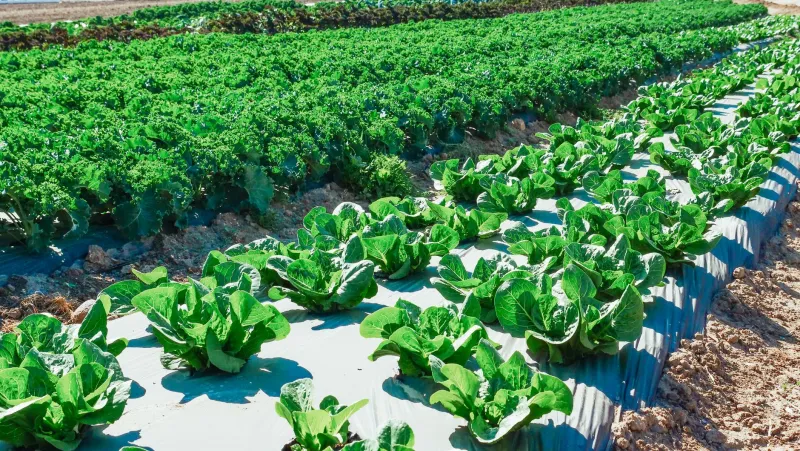
Kelly Tee organic romaine from our CSA box: Priced at approximately $2.75 for a head — often larger and harvested within 24 hours of delivery — yielding 8 or more servings. That's closer to $0.34 per serving.
Wait. The organic option is cheaper per serving? In this case, yes — because local organic produce is typically harvested at full size and peak freshness, meaning you're not paying for water weight that's already evaporated, or trimming off wilted outer leaves before you even start cooking.
Food waste is the silent budget killer most people don't account for. The USDA estimates that American households throw away between 30 and 40 percent of their food supply. Supermarket produce, which can travel thousands of miles before hitting shelves, has a significantly shorter fridge life once it gets to your kitchen. Locally grown vegetables, harvested days (or hours) before you get them, stay fresh dramatically longer. Less waste means your dollar goes further — full stop.
Five Strategies Our Customers Actually Use
1. Join a CSA and Treat It Like a Utility Bill
A Community Supported Agriculture subscription — like the boxes we offer here at Kelly Tee — is one of the smartest budget moves a family can make. You pay upfront for a season of produce, which locks in pricing, eliminates impulse buying, and forces a kind of creative, vegetable-forward cooking that naturally reduces your overall food spend. Think of it like your electric bill: it's a fixed cost you plan around, not a surprise.
Sarah M., a mom of three from outside Columbus, Ohio, told us: "When I first signed up for the Kelly Tee CSA, I was nervous about the upfront cost. But within six weeks, I realized I'd basically stopped buying snack foods and processed sides because the box kept us so well-stocked with real food. My grocery bill went down."
2. Build Meals Around the Vegetable, Not the Protein
This is the single most impactful shift you can make. In the American food culture, we tend to build plates around a central protein — the chicken breast, the steak, the pork chop — and treat vegetables as a side. Flip that model. A big pot of seasonal vegetable soup, a grain bowl loaded with roasted root vegetables, or a frittata built around whatever greens are in your CSA box this week will cost a fraction of a meat-centered meal and deliver more micronutrient variety.
Meat is expensive. Organic vegetables are not. Centering your meals on what's growing seasonally is both the most affordable and, nutritionally speaking, the most defensible way to eat.
3. Learn Three or Four "Template" Recipes
You don't need a different recipe for every vegetable. A stir-fry template, a roasting template, a grain bowl template, and a soup template will carry you through almost any combination of seasonal produce without wasted ingredients or decision fatigue. When your CSA box arrives with something unfamiliar — kohlrabi, anyone? — you're not starting from scratch. You're just plugging a new ingredient into a framework you already know.
4. Preserve What You Can't Use Immediately
Freezing, fermenting, and simple pickling are not lost arts — they're practical budget tools. Blanch and freeze extra kale or spinach before it turns. Quick-pickle radishes or cucumbers with nothing more than vinegar, salt, and water. Make a big batch of tomato sauce in August when tomatoes are at peak season and cheapest, then freeze it in portions for winter. These habits stretch your seasonal produce investment dramatically.
5. Shop the "Seconds"
Ask your local farm — including us — about imperfect or surplus produce. These are vegetables that don't meet the cosmetic standard for market display but are nutritionally identical (often superior, since they're usually the most mature). Many farms sell seconds at a significant discount, and they're perfect for soups, sauces, and roasting where appearance doesn't matter.
What You're Actually Saving On
Here's the reframe that changes everything: the question isn't "can I afford to eat organic?" It's "what am I currently spending money on that organic, local eating would replace?"
Processed snack foods. Takeout orders on nights when there's nothing ready to cook. Supplements trying to compensate for a nutrient-poor diet. Frequent doctor visits tied to diet-related inflammation. These aren't hypotheticals — they're line items in the average American household budget that quietly add up to hundreds, sometimes thousands, of dollars a year.
Marcus T., a Kelly Tee customer from the Nashville area, put it in terms we found hard to argue with: "I used to spend $60 a week on groceries and still order pizza twice a week. Now I spend $75 on my CSA box and farmers market, I barely order out, and I haven't bought a bottle of vitamins in eight months. I'm spending less overall and feeling better than I have in years."
Starting Small Is Still Starting
Nobody's asking you to overhaul everything at once. Start with one swap: your salad greens, your garlic, your tomatoes. Get familiar with what locally grown food tastes like — because once you do, it becomes its own motivation. When a tomato from our garden actually tastes like a tomato, you stop reaching for the processed sauce. When you bite into one of our sweet peppers, you don't need to dress it up with anything.
Local organic eating isn't a luxury lifestyle. It's a set of habits and choices that, built intentionally over time, can actually improve your financial picture while improving your health. The myth that it's out of reach for regular people? We'd love to help you leave that one behind.
Stop by our farm stand, check out our CSA options at kellyteegardenorganics.com, or just start asking questions. We grow food for people who want to eat with purpose — and that's everyone.