Certified Organic, Certified Disappointing: The Dirty Secret Behind Supermarket Produce
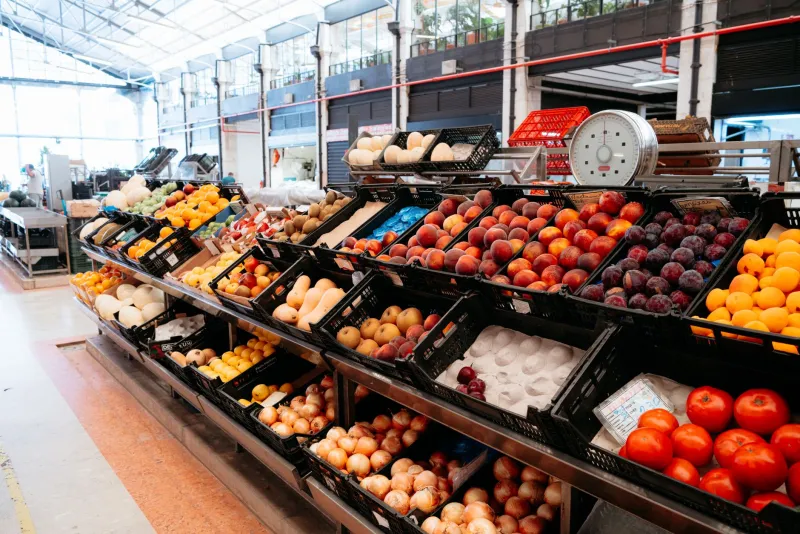
Let's be honest. You've picked up an organic peach at a big-box grocery store, taken a hopeful bite, and felt that little pang of betrayal. It's mealy. It's bland. It tastes like something that has forgotten what a peach is supposed to taste like. You paid the premium. You did the right thing. And yet — nothing.
You're not imagining it. And you're definitely not alone.
Here at Kelly Tee Garden Organics, we talk a lot about what it means to grow food with intention. So when the organic label starts feeling like a broken promise, we think it's worth digging into why — because the answer says a lot about how industrial food systems work, and what we've collectively allowed to happen to the word "organic."
When Big Agriculture Went Organic (Without Really Going Organic)
The USDA Organic certification was a genuine milestone when it launched in 2002. It meant no synthetic pesticides, no GMOs, no sewage sludge fertilizers. Real guardrails. But here's the thing about guardrails — they tell you what you can't do. They say nothing about what you should do.
Over the past two decades, large-scale agricultural operations figured out that the organic market was booming and they wanted in. So they made the switch — swapping synthetic inputs for approved organic ones — while keeping everything else the same. The monocultures. The soil-depleting tillage. The harvest-before-ripeness schedules designed around shipping timelines, not taste. The varieties selected for shelf life and visual appeal, not flavor complexity.
The result? Industrial organic. Same factory-farm logic, different paperwork.
"The certification tells you what they didn't spray on it," says one small-scale farmer who sells at farmers markets across the Mid-Atlantic. "It doesn't tell you anything about the soil it grew in, how long it was on the vine, or how far it traveled to get to you."
That distinction matters enormously — and most grocery shoppers have no way of knowing it from a sticker.
The Flavor-Yield Tradeoff Nobody Talks About
Flavor is metabolically expensive for a plant. The compounds that make a tomato taste like a tomato — the volatile aromatics, the sugars, the acids — take time and energy to develop. They're also largely incompatible with maximizing yield per acre.
Conventional farming solved this problem by simply not caring about flavor. Industrial organic farming has quietly made the same choice. When you're moving millions of pounds of produce through a national supply chain, you need fruit that can handle the journey. That means picking early, refrigerating fast, and selecting varieties engineered for durability rather than deliciousness.
A strawberry bred to survive a cross-country truck ride is a fundamentally different object than one bred to explode with sweetness at peak ripeness. Both can carry the organic label. Only one will make you close your eyes when you eat it.
This isn't a conspiracy — it's just economics. And it's why the organic section at your local supermarket often tastes suspiciously similar to the conventional section right next to it.
What a Real Taste Test Reveals
We ran an informal comparison — the kind any curious home cook could replicate. We grabbed organic cherry tomatoes from a national grocery chain and compared them side-by-side with organic cherry tomatoes from a small farm at a local farmers market. Same week. Same general region of origin (or so the grocery store claimed).
The difference was startling. The supermarket tomatoes were uniform, firm, and almost entirely without aroma. Bite in, and you get a mild acidity and not much else. The farmers market tomatoes — irregular, slightly soft in places, deeply fragrant — delivered a concentrated burst of sweetness layered over bright acidity. They tasted like tomatoes are supposed to taste.
Both were certified organic. One had clearly been grown with flavor as a priority. The other had been grown with logistics as a priority.
The farmers market farmer explained it simply: "I pick when they're ready, not when the truck schedule says to pick. And I grow varieties that taste good, not varieties that photograph well."
The Soil Story Nobody Prints on the Label
Under both fields, of course, is soil. And this is where the gap between industrial organic and small-farm organic gets really wide.
Healthy, living soil — the kind built through composting, cover cropping, and minimal disturbance — produces plants with deeper root systems, better access to trace minerals, and higher concentrations of the secondary metabolites that create flavor and nutritional density. Industrial operations, even certified organic ones, often rely on approved synthetic-adjacent inputs and heavy tillage that degrade soil biology over time.
A carrot grown in genuinely thriving soil doesn't just taste better. It contains more of the compounds your body actually wants — polyphenols, antioxidants, vitamins that don't survive a three-week refrigerated journey from California to your kitchen in Ohio.
The organic label was never designed to certify soil health. It was designed to certify input restrictions. Those are related things, but they are not the same thing.
So What Should You Actually Look For?
This isn't a reason to abandon the organic label — it still matters, especially for the highest-pesticide crops on the Dirty Dozen list. But it's a reason to treat it as a floor, not a ceiling.
Here's what actually signals better produce, organic or not:
Local and seasonal. Produce that didn't travel far and was harvested closer to peak ripeness will almost always taste better and retain more nutrition. Ask your grocery store where the organic produce comes from. If they can't tell you, that's information.
Farmers market sourcing. Talk to the person who grew it. Ask what variety it is, when it was picked, and how they manage their soil. A farmer who can answer those questions enthusiastically is probably growing something worth eating.
Ugly and irregular. Perfect uniformity is a sign of industrial growing. Lumpy, oddly shaped, variably colored produce is often a sign that flavor was the priority.
Smell it. Seriously. A ripe peach should smell like a peach from three feet away. If you have to press your nose against it and still get nothing, put it down.
CSA boxes and direct farm subscriptions. Community Supported Agriculture programs connect you directly with small farms. You get what's in season, harvested when it should be, grown by someone who knows your name.
The Label Is a Starting Point, Not the Whole Story
We grow food here at Kelly Tee Garden Organics because we believe the way food is grown changes everything about it — the flavor, the nutrition, the impact on the land, the relationship between the people growing it and the people eating it. That belief doesn't fit neatly on a certification sticker.
The organic movement started as a rejection of industrial food logic. Somewhere along the way, industrial food logic crept back in wearing different clothes. Recognizing that isn't cynicism — it's the kind of informed eating that actually moves the needle.
Ask more questions. Smell your peaches. Find your farmer. The flavor difference will tell you everything the label doesn't.