What's Actually Living Under Your Garden Beds (And Why It Matters More Than You Think)

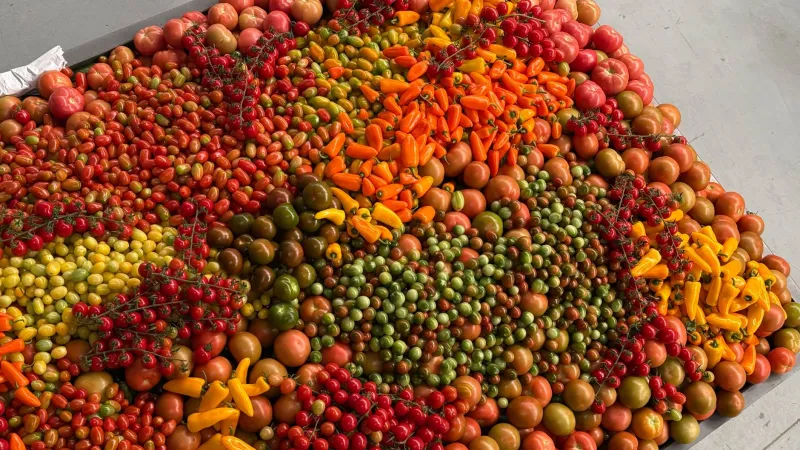
Photo: Osama Ashoush, CC BY-SA 4.0, via Wikimedia Commons
Let's talk about what you're actually standing on when you walk through your garden.
A single teaspoon of healthy garden soil contains somewhere between one hundred million and one billion bacteria, along with thousands of fungal species, nematodes, protozoa, and arthropods that most of us have never thought about. This is not a horror story. This is the most important ecosystem you'll ever manage — and if you're growing food for your family, understanding it changes everything about how you garden and what ends up on your table.
At Kelly Tee Garden Organics, we spend a lot of time talking about what's in your food. Today, we want to talk about what's in your soil — because those two things are far more connected than most home gardeners realize.
Soil Is Not Dirt
The first shift in thinking is a simple one, but it matters: soil is not dirt. Dirt is what you track across the kitchen floor. Soil is a living system with its own food web, its own chemistry, and its own communication networks.
Plants are not passive recipients of nutrients sitting in the ground waiting to be absorbed. They actively recruit specific microbial communities around their root systems — a zone called the rhizosphere — by exuding sugars and proteins that feed certain bacteria and fungi. In exchange, those microbes break down organic matter, fix atmospheric nitrogen, solubilize phosphorus, and produce compounds that help plants resist disease and drought. It's a transaction that's been running for about 450 million years, and it works extraordinarily well when we don't interfere with it.
When that microbial community is thriving, the plants growing in it are more nutritionally dense. Research from the Rodale Institute and other agricultural science organizations has found measurable differences in the phytonutrient content of crops grown in biologically active soil compared to those grown in depleted or chemically managed soil. This means what lives in your backyard beds has a direct bearing on what your family is actually eating.
Reading Your Soil Without Sending It to a Lab
You don't need expensive equipment to get a meaningful read on your soil biology. Some of the most useful indicators are visible to the naked eye — if you know what you're looking for.
The earthworm count. Dig a one-foot-square hole about twelve inches deep in your garden bed. Count the earthworms you find. Fewer than five suggests poor biological activity. Ten or more is a good sign. More than twenty means your soil ecosystem is genuinely thriving. Earthworms are a proxy for overall microbial health — they need organic matter and a complex food web to survive, so their presence indicates conditions that support the full range of beneficial organisms.
The jar test for texture. Fill a mason jar two-thirds with water and add a cup of your garden soil. Shake it vigorously, then let it settle for 24 to 48 hours. Sand sinks first, then silt, then clay. The relative thickness of each layer tells you your soil's basic texture — information that shapes which amendments you need and what crops will thrive.
The smell test. Good soil smells like petrichor — that rich, earthy scent after rain. That smell comes from a compound called geosmin, produced by actinomycetes bacteria. If your soil smells musty, sour, or like nothing at all, it's telling you something about its microbial state. Rich earthy smell equals biological activity. Sour smell often indicates compaction and poor drainage. No smell at all can suggest depleted organic matter.
The ribbon test for clay content. Take a small amount of moist soil and try to roll it into a ribbon between your fingers. If it forms a long, smooth ribbon, you have significant clay content — which means good nutrient retention but potential drainage issues. If it crumbles immediately, you're working with sandy soil that drains fast but doesn't hold nutrients well.
Affordable Soil Testing That Actually Tells You Something
For a more detailed picture, a basic soil test through your state's cooperative extension service typically costs between $15 and $30 and will give you pH, macronutrient levels (nitrogen, phosphorus, potassium), and sometimes micronutrient data. This is genuinely useful information, and it's far more affordable than most gardeners realize.
For microbial-specific testing, companies like Biome Makers and Ward Laboratories offer home gardener soil health panels that measure biological activity, fungal-to-bacterial ratios, and overall organic matter. These run from $50 to $150 depending on depth of analysis. If you're serious about growing the most nutritious food possible, this investment pays off quickly in the form of crops that actually taste like something.
What you're looking for in a healthy soil biology report:
- High organic matter percentage (ideally 4–6% for vegetable gardens)
- Balanced fungal-to-bacterial ratio (vegetable gardens do well with slightly more bacterial activity; perennial beds prefer more fungal dominance)
- Active carbon measurements that indicate microbial food availability
- pH in the 6.0–7.0 range for most vegetables, which is the sweet spot for nutrient availability
Simple, Low-Cost Ways to Feed Your Soil Ecosystem
Here's the good news: improving your soil biology doesn't require a big budget or complicated chemistry. The most effective interventions are also the most straightforward.
Compost is the foundation. A two-to-three-inch layer of finished compost worked into your beds each spring introduces billions of beneficial organisms and provides the organic matter they need to thrive. Make it yourself if you can — kitchen scraps, yard waste, and coffee grounds composted for three to six months will outperform most bagged products.
Mulch keeps the ecosystem intact. Bare soil is stressed soil. Mulching with straw, wood chips, or shredded leaves moderates temperature, retains moisture, and feeds the fungal networks that connect your plants to the broader soil food web. Three inches of mulch can transform a struggling bed within a single growing season.
Stop tilling so much. This is a hard habit to break, but tilling disrupts fungal mycelium networks that take years to develop. Switching to a no-till or minimal-till approach — using a broadfork to aerate without inverting the soil — preserves the microbial architecture that took time to build.
Plant cover crops between seasons. Leguminous cover crops like clover, vetch, and field peas fix atmospheric nitrogen and feed microbial communities through their roots during the off-season. This is one of the highest-return investments a home gardener can make.
Avoid synthetic fertilizers when possible. Synthetic nitrogen in particular disrupts the microbial negotiations happening in your rhizosphere. When plants can get nitrogen easily from a bag, they stop feeding the bacteria that would otherwise provide it — and the relationship breaks down.
What Better Soil Means for Your Dinner Table
This is where it gets personal. When your soil biology is functioning well, the carrots you pull from your backyard have higher levels of beta-carotene. Your kale has more calcium and iron. Your tomatoes have more lycopene and complex flavor compounds. This isn't theoretical — it's measurable, and it's the reason that a backyard tomato grown in healthy soil tastes nothing like a grocery store tomato grown in managed monoculture.
You are, in the most literal sense, what your soil is. And when you take the time to understand and nurture what's living beneath your garden beds, you're not just growing better vegetables. You're growing better food — for your family, your gut, and your long-term health.
That's what grown with love actually means around here.