Meet the Microbes: How Living Soil Sends Healing Messengers Straight to Your Body
There's a quiet conversation happening between the ground and your gut that most of us never think about at the grocery store. When you reach for a bunch of organic kale or a bag of locally grown beets, you're not just picking up fiber and folate. You're picking up travelers — billions of microscopic organisms that called the soil home and are now, quite literally, along for the ride into your body.
This isn't a metaphor. It's microbiology. And the science behind it is changing the way researchers, farmers, and health-conscious eaters think about what food actually is.
What Makes Organic Soil So Alive
Conventional farming relies on synthetic fertilizers and pesticide applications that, over time, strip the land of its microbial complexity. Glyphosate, for example — the active ingredient in many common herbicides — has been shown in peer-reviewed research to disrupt soil bacterial communities, particularly species that produce natural antibiotics and support plant immunity.
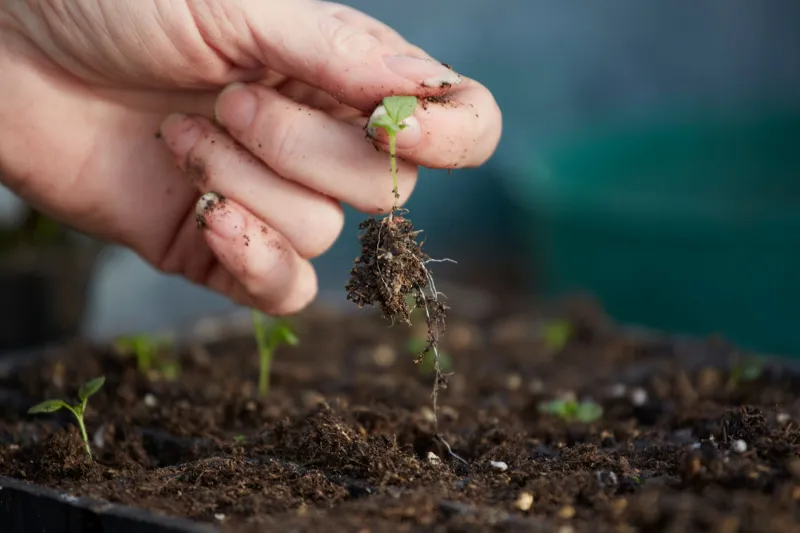
Organic farming takes the opposite approach. By feeding the land with compost, cover crops, and minimal disturbance, organic operations create a microbial paradise. A single teaspoon of healthy organic soil can contain up to one billion bacteria, thousands of fungal species, and a web of mycorrhizal networks that make the internet look simple.
That diversity doesn't just help plants grow — it produces the compounds and organisms that, when they reach your plate, may actively support your wellbeing.
Bacillus subtilis: The Quiet Protector
One of the most well-studied soil bacteria found in abundance on organically grown produce is Bacillus subtilis. This hardy, spore-forming bacterium survives the journey from field to fork more reliably than most, because its spore form is resistant to heat and stomach acid.
Once inside your digestive tract, B. subtilis has been documented to produce a range of antimicrobial peptides — essentially natural antibiotics that selectively target harmful pathogens like Salmonella and Clostridium difficile while leaving beneficial species intact. Research published in journals including Frontiers in Microbiology has linked B. subtilis supplementation to improved gut barrier integrity and reduced intestinal inflammation.
The catch? Most of that research uses supplement-grade concentrations. But here at Kelly Tee Garden Organics, we find it deeply meaningful that the baseline exposure starts in the ground — and that eating clean, chemical-free produce is one of the most natural ways to keep that exposure consistent.
Mycorrhizal Fungi: The Underground Internet That Feeds You Too
Mycorrhizae are fungi that form symbiotic relationships with plant roots, extending the plant's reach for water and nutrients by orders of magnitude. In organic soil, mycorrhizal networks are robust and diverse. In conventionally farmed land — especially fields that use synthetic phosphorus fertilizers — these networks often collapse entirely, because the plant has no need to invest in the relationship.
Species like Glomus intraradices (now reclassified as Rhizophagus irregularis) are among the most common and studied. What makes this relevant to your health is that mycorrhizal fungi produce compounds called glomalin — a sticky glycoprotein that binds soil particles together and also, when you consume produce grown in mycorrhizal-rich soil, appears to carry prebiotic properties that feed beneficial bacteria in your colon.
Beyond glomalin, mycorrhizal-associated produce tends to be richer in secondary metabolites — the polyphenols, flavonoids, and terpenoids that function as antioxidants in your body. The fungi essentially push the plant to produce more of its own chemical defenses, and those same chemicals are the ones linked to anti-inflammatory and cancer-preventive effects in human studies.
Lactobacillus and the Fermentation Connection
You've probably seen Lactobacillus on the label of your yogurt or kombucha. What you might not know is that wild strains of Lactobacillus species — including L. plantarum and L. brevis — naturally inhabit the surface of fresh vegetables grown in living soil.
These bacteria are the original fermenters. Before refrigeration, before commercial probiotics, humans were getting regular doses of Lactobacillus simply by eating unwashed, field-fresh produce. L. plantarum in particular has an impressive research profile: it's been associated with reduced symptoms of irritable bowel syndrome, improved production of short-chain fatty acids (which feed colon cells), and even modulation of immune response pathways linked to allergies and autoimmune conditions.
When produce is grown in chemically managed soil, these populations are sparse. When it's grown organically — and especially when it's sourced locally and eaten fresh — the counts go up significantly. This is part of why the farm-to-table movement isn't just about flavor. It's about the living cargo that arrives with every bite.
Streptomyces: Soil's Own Pharmacy
Here's one that might surprise you. Streptomyces is a genus of soil bacteria responsible for producing the vast majority of naturally derived antibiotics used in modern medicine — streptomycin, tetracycline, and erythromycin all trace their origins to this genus. In healthy organic soil, Streptomyces species are abundant.
Researchers have found Streptomyces strains on the surface of organic vegetables, and while the concentrations aren't therapeutic in the clinical sense, exposure to these bacteria — and to the volatile organic compounds they produce — has been linked in some studies to immune priming. There's even a line of research connecting contact with soil microbes like Streptomyces to the production of serotonin in the gut, via the compound 2,3-butanediol, which may stimulate serotonin release in intestinal cells.
That earthy smell you get when you dig into fresh garden soil? That's largely Streptomyces at work, producing a compound called geosmin. And it turns out humans are extraordinarily sensitive to it — we can detect geosmin at concentrations of five parts per trillion. Some researchers believe this sensitivity evolved precisely because it helped our ancestors locate fertile, microbe-rich soil. We were built to find this stuff.
Why This Matters More Than a Supplement Label
The wellness industry has done a solid job convincing Americans that the path to gut health runs through a capsule. And while targeted probiotic therapy has genuine clinical applications, there's something fundamentally different about encountering these organisms in context — embedded in food, attached to plant fibers that act as prebiotics, accompanied by the polyphenols and minerals that help them thrive once they reach your colon.
This is what food scientists call the "food matrix effect" — the idea that nutrients and organisms interact differently when they arrive together in whole food versus in isolation. A Lactobacillus strain consumed with the fiber of a fresh organic beet behaves differently than the same strain in a gelatin capsule with maltodextrin.
At Kelly Tee Garden Organics, this is the whole point. Growing food in living, chemical-free soil isn't just about avoiding what's harmful — it's about preserving what's invisible and irreplaceable. The microbial community in your food is part of the harvest. It always has been. We've just gotten better at seeing it.
What You Can Do Starting Now
You don't need a lab report to benefit from this. A few practical shifts make a real difference:
- Buy local and organic when you can. Shorter transit time means more viable microbes arrive with your produce.
- Don't over-sanitize your vegetables. A rinse under cool water is fine. Soaking in bleach-based washes or scrubbing aggressively strips surface microbial life.
- Eat a wide variety of produce. Different plants host different microbial communities. Diversity on your plate builds diversity in your gut.
- Grow something yourself. Even a container of herbs on a sunny windowsill gets you in contact with soil organisms in ways that grocery store produce alone can't replicate.
The ground beneath an organic farm is one of the most complex ecosystems on Earth. When it's treated right, it sends that complexity into your food — and ultimately, into you. That's not just good farming. That's medicine you can grow.